South Korea has announced plans to shift its Civilian Control Line closer to the border with North Korea, easing long-standing restrictions on civilian movement in areas near the heavily militarised frontier.
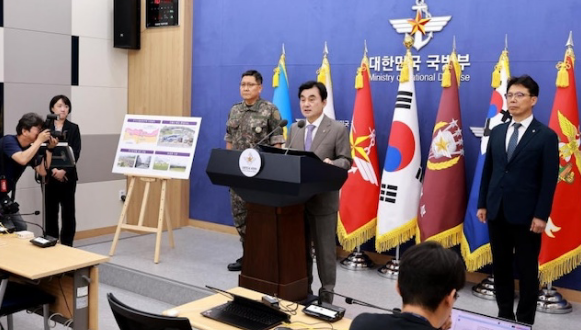
The decision was disclosed on Wednesday by Defence Minister Ahn Gyu-back, who said the adjustment would reduce the size of the restricted zone south of the Military Demarcation Line (MDL), the de facto boundary established after the 1950–53 Korean War.
The Civilian Control Line currently extends up to 10 kilometres south of the MDL and restricts entry without military authorisation.
Under the new arrangement, it will be moved to an average of about six kilometres from the border, opening additional areas for civilian use.
Officials said the change reflects improved defence readiness while addressing long-standing demands from residents living in border communities.
Thousands of people are expected to benefit from the policy shift.
Reports indicated that about 20,000 residents currently live within the controlled zone, with many more commuting into the area daily for farming and work under strict military clearance procedures.
The Defence Ministry also announced supplementary measures, including relaxed reporting requirements for drone use in agricultural activities, a step expected to ease operational burdens on local farmers.
The policy adjustment is part of broader efforts by the administration of President Lee Jae Myung to reduce tensions on the Korean Peninsula and improve living conditions in border regions.
Since taking office last year, the government has pursued initiatives aimed at lowering military friction while encouraging stability along the heavily fortified frontier.
However, relations with North Korea remain strained, with Pyongyang maintaining a consistently hostile posture despite Seoul’s diplomatic outreach and policy adjustments.
Analysts said the latest move reflects South Korea’s attempt to balance security concerns with the everyday needs of civilians living near one of the world’s most sensitive borders, where military vigilance and civilian life remain closely intertwined.