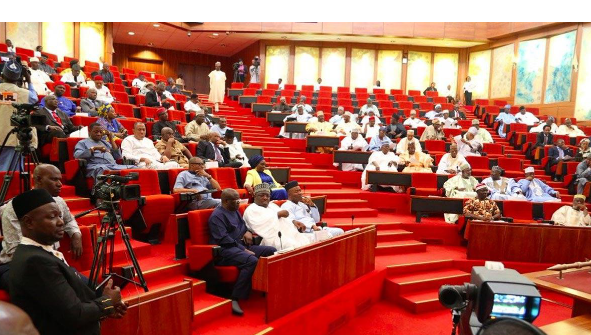
The National Assembly has passed the National Inland Waterways Authority (Repeal and Re-enactment) Bill, 2026, introducing a new legal framework designed to redefine the regulation of Nigeria’s inland waterways and resolve longstanding disputes between the federal and state governments.
The bill, which originated from the House of Representatives, repealed and replaced the existing National Inland Waterways Authority (NIWA) Act and is expected to be transmitted to President Bola Tinubu for assent before becoming law.
The legislation followed a landmark Supreme Court judgment delivered in a dispute between Lagos State and the Federal Government over the constitutional limits of federal authority on inland waterways and adjoining lands.
In the judgment, the apex court ruled that the Federal Government’s control over inland waterways must remain within the powers granted by the Constitution.
The court specifically declared Sections 12 and 13 of the existing NIWA Act unconstitutional to the extent that they allowed federal control over lands adjoining waterways for purposes beyond navigation, maritime activities and fishing.
The seven-member panel, led by Justice Mohammed Lawal Garba, held that the National Assembly exceeded its constitutional powers by extending federal authority to adjoining lands for non-navigational purposes.
To address the legal concerns, the new bill clearly defined NIWA’s jurisdiction, removes provisions invalidated by the Supreme Court and establishes clearer boundaries between federal and state responsibilities.
The legislation is also aimed at attracting private sector investment into inland water transportation by creating a more predictable regulatory environment while strengthening provisions on navigation safety, environmental protection and sustainable development of Nigeria’s waterways.
Speaking after the Senate concurred with the bill on Thursday, Senate President Godswill Akpabio described the reform as a significant step towards improving the management of inland waterways and unlocking economic opportunities for states and investors.
Akpabio said the new law would eliminate recurring conflicts over control of waterways, improve coordination between government authorities and encourage investment in the sector.
“This legislation brings a clear sense of direction to the management of inland waterways in Nigeria. It allows greater participation by state governments as well as the private sector in the management of our inland waterways,” he said.
The Senate President expressed hope that the reform would help reduce frequent boat accidents and loss of lives by improving safety standards across the country’s waterways.
“I believe this law will help reduce the recurring cases of boat accidents and the needless loss of innocent lives on our waterways.
”It will also improve revenue generation for the states and encourage a more robust and sustainable transport system,” Akpabio added.
The Senate also approved amendments expanding the judicial structure of the Federal Capital Territory, a move aimed at improving justice delivery and reducing delays caused by increasing litigation.
Akpabio said the growing population of Abuja and rising court cases made the expansion necessary, stressing that an efficient judiciary was essential to public confidence.
“Justice delayed is justice denied. Expanding the courts will ensure quicker dispensation of justice and strengthen the confidence of Nigerians in the judiciary, which must remain the last hope of the common man,” he said.
In another legislative action, the Senate passed amendments to the National Tobacco Control Act to strengthen regulations on tobacco and other non-combustible products.
Akpabio said stricter enforcement would help address rising health concerns associated with tobacco use, particularly among young Nigerians, while protecting non-smokers from the effects of passive smoking.
Before proceeding on annual recess, the Senate also adopted recommendations from its Ad Hoc Committee on the National Security Summit, paving the way for the final preparations for the event.
Senate Leader, Senator Opeyemi Bamidele, disclosed that the summit would hold from September 21 to 23, 2026, subject to venue availability and the President’s schedule.
The summit, themed “Strengthening Nigeria’s National Security Architecture: Innovation, Collaboration and Resilience in a Changing World,” will bring together government officials, security chiefs, governors, traditional and religious leaders, diplomats, academics, civil society groups, media representatives and private sector stakeholders.
President Bola Tinubu is expected to declare the summit open, while Akpabio will deliver the welcome address.
Bamidele said members of the planning committee had agreed to cut short their recess to ensure proper preparation, with five subcommittees established to oversee logistics, accommodation, media, finance and conference management.
Following the completion of legislative activities, the Senate adjourned plenary until September 15, 2026, when lawmakers are expected to resume for a new legislative session.
Akpabio urged senators to remain committed to their responsibilities and prayed for their safety during the recess.