West African leaders have launched a regional campaign to end decades of women’s exclusion from political leadership, with ECOWAS setting 2035 as the target for achieving gender parity across the sub-region.
The commitment was reached at the Forum on Women’s Political Leadership in West Africa held in Abuja, where political leaders, lawmakers, ministers, electoral bodies, civil society groups and development partners agreed to tackle the legal, financial and institutional barriers limiting women’s participation in governance.
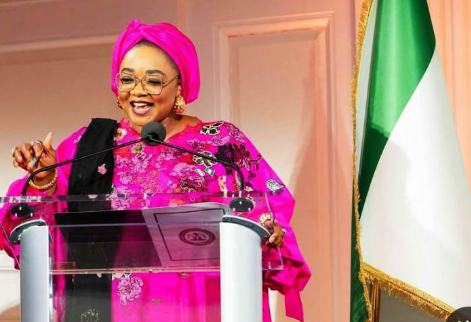
Nigeria’s Minister of Women Affairs, Imaan Sulaiman-Ibrahim, said greater inclusion of women in politics was no longer only an issue of fairness but a critical requirement for national development, economic progress and stronger democratic institutions.
She said the forum was designed to move beyond repeated promises through the proposed Abuja Action Agenda, which aims to accelerate the ECOWAS 2035 Gender Parity Agenda, improve financing opportunities for female political candidates, address violence against women in politics and strengthen accountability for progress.
According to the minister, Nigeria is already taking steps to expand women’s leadership opportunities through the implementation of the Third National Action Plan on Women, Peace and Security and the restructuring of leadership academies across the country’s six geopolitical zones.
She maintained that sustainable development would remain difficult if women continued to be excluded from decisions affecting governance, public investment, peacebuilding and social protection.
Sulaiman-Ibrahim also disclosed that the Special Reserved Seats Bill for women was undergoing further review to ensure it aligns with Nigeria’s political realities.
She said alternative proposals, including an electoral college system, were being considered to create a more effective framework for increasing women’s representation in elective positions.
“We are still trying to find what instrument is fit for Nigeria so that we can give our system the necessary shock it requires to admit many more women while we continue to compete on a level playing field,” she said.
The minister added that President Bola Tinubu’s administration was committed to aligning Nigeria’s reforms with regional gender commitments, while preparing to host an International Family Summit later this year.
However, ECOWAS Commission Vice President Damtien Tchintchibidja warned that the success of the initiative would depend on practical implementation rather than declarations.
She said the regional body would work with member states to translate the Freetown Declaration into action through legislative reforms, dedicated funding, peer-review mechanisms and stronger partnerships with organisations such as the United Nations Development Programme (UNDP).
Tchintchibidja added that ECOWAS would monitor progress towards achieving gender parity by 2035 through regular reporting and accountability systems.
Sierra Leone’s Minister of Gender and Children’s Affairs, Isata Mahoi, highlighted her country’s affirmative action measures, revealing that women now occupy 30 per cent of parliamentary seats following the implementation of the Gender Equality and Women’s Empowerment Act.
She said electoral laws requiring political parties to nominate at least one woman among every three candidates, alongside improved land ownership rights, mentorship programmes and scholarships for girls in science and technology, had contributed to the progress.
Liberia’s Minister of Gender, Children and Social Protection, Gbeme Horace-Kollie, identified financial barriers as one of the biggest challenges facing women seeking elective office.
She called for reforms including mandatory campaign funding support for female candidates, reduced nomination fees, access to credit facilities and sustainable financial assistance programmes.
Senator Dr. Chantal Moussokoura Fanny of Côte d’Ivoire cautioned that commitments must be backed by political action, noting that many countries were yet to reach even the 30 per cent minimum representation target for women.
She argued that achieving gender parity should involve ministries of justice, finance and other key institutions rather than being treated as the responsibility of gender-focused agencies alone.
The senator also urged established female leaders across Africa to prioritise mentorship, stressing that deliberate investment in younger women leaders was essential for lasting political transformation.
The Abuja forum ended with renewed calls for governments, political parties, electoral bodies and development partners to move from advocacy to action by removing barriers that have restricted women’s participation in governance across West Africa.