Professor Patrick Lumumba, Kenyan scholar, lawyer and Pan-Africanist, has urged Nigeria and the Delta Government to reduce dependence on oil by investing in innovation, research, energy and stronger African partnerships to drive sustainable economic growth.
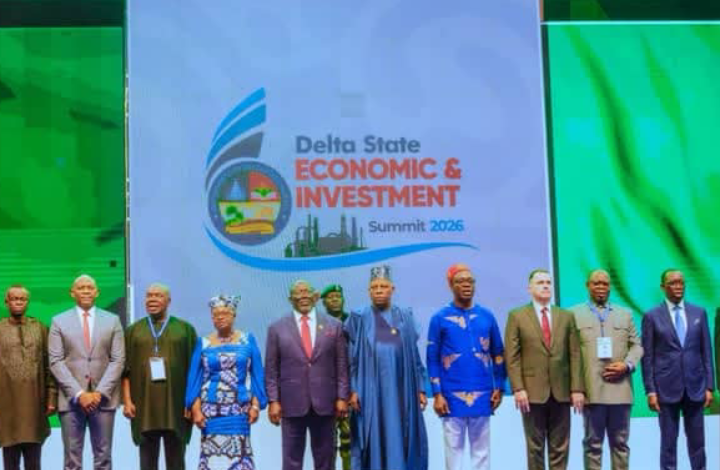
Speaking on Monday at the Delta State Economic and Investment Summit in Asaba, Lumumba described the gathering as a platform for charting a stronger economic future for Delta, Nigeria and the African continent.
The summit was themed “Harnessing Our Strengths, Unlocking Our Potential.”
He said Africa’s youthful population would only become an advantage if governments created opportunities through innovation, education and economic reforms.
“We are quick to say that Africa has 1.4 billion people, but what are we doing with that population?” he asked.
“Many young Africans are risking their lives trying to cross into Europe because opportunities are lacking at home.”
Lumumba commended the Delta Government for recognising the state’s strengths in oil, agriculture, minerals and the blue economy, but stressed that effective management of these resources remained the key to long-term prosperity.
He encouraged the state to draw lessons from countries such as Norway, where prudent management of oil revenues through a sovereign wealth fund has secured future generations.
“The question is not whether you have resources but how you use those resources to secure the future,” he said.
The scholar noted that Delta’s economy was larger than those of more than 20 African countries, urging leaders to channel such enormous potential into improved living standards and economic transformation.
He identified technology, artificial intelligence, agriculture, pharmaceuticals and the blue economy as sectors that would shape future economic competitiveness.
Lumumba also called for increased investment in research and home-grown innovation, warning that Africa could not continue relying on foreign technologies.
“The world is talking about artificial intelligence, but Africans must ask themselves who controls the technology. We cannot depend entirely on others for our future.”
He further urged African countries to deepen regional integration by promoting intra-African trade and investment under the African Continental Free Trade Area.
According to him, African investors possess the financial and intellectual capacity to transform the continent and should be encouraged to invest across borders.
He advised Delta State to attract investors from other African countries, including Kenya, Ghana, Ethiopia, Morocco and Egypt, to strengthen regional economic cooperation.
Lumumba also called on Nigeria to champion policies that would ease the movement of people, goods and investments across Africa.
On education, he urged governments to equip graduates with practical skills while investing more in research capable of addressing challenges in agriculture, energy and industry.
“Our universities must not only produce graduates; they must produce ideas and research that solve problems in agriculture, energy, industry and other sectors.”
Describing electricity as the backbone of industrial growth, Lumumba said Nigeria’s inadequate power supply remained a major obstacle to competitiveness.
“If we do not solve our energy challenge, we cannot compete globally. Energy must remain a priority.”
He commended Gôvernor Sheriff Oborevwori for his development efforts and urged him to build enduring institutions that would outlive his administration.
“You are not successful until your successor succeeds. Development must outlive individuals and become a lasting legacy.”