Nigeria and the Republic of Benin are moving to strengthen joint security operations as both countries seek to prevent criminals and violent extremist groups from exploiting their shared borders.
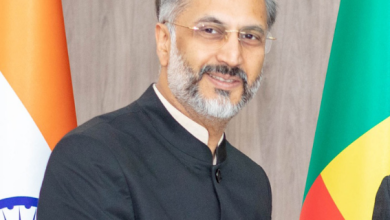
The renewed commitment followed a three-day working visit to Cotonou by Nigeria’s Minister of Defence, General Christopher Musa (retd.), who met with his Beninese counterpart, Gildas Agonkan.
The discussions centred on improving cooperation between the two countries’ security forces, particularly in intelligence gathering, border protection and coordinated military operations.
Both sides agreed to develop real-time intelligence-sharing and fusion mechanisms that would allow their forces to identify, track and disrupt transnational criminal networks and insurgent groups before they can carry out attacks.
The agreement is also aimed at protecting democratic governance, strengthening security along the land borders and confronting piracy and other maritime crimes in the Gulf of Guinea.
Joint Operations To Block Criminal Networks
Musa said Nigeria was prepared to work more closely with Benin to prevent criminals from using border communities as routes for movement and attacks.
“We are going to partner with the troops of the Republic of Benin to ensure that we stop all those bandits, all those criminals that are killing people in our own countries, so that we can deal with them,” the minister told Nigerian troops during his visit.
He said closer coordination between both countries would be critical to stopping criminals from exploiting gaps along the borders.
“One of the reasons for my visit is to come here and meet their own Minister of Defence so that we can sit down and see how we can work out our operations together, so that we can stop these people from infiltrating through our borders,” Musa added.
Nigeria also offered Benin greater operational flexibility for security personnel pursuing criminals around border areas, as part of measures designed to limit insurgent spillover and illegal trafficking.
Musa reiterated Nigeria’s zero-tolerance position on terrorism, stressing the importance of preventing violent extremist groups from establishing safe havens in communities along the two countries’ shared frontier.
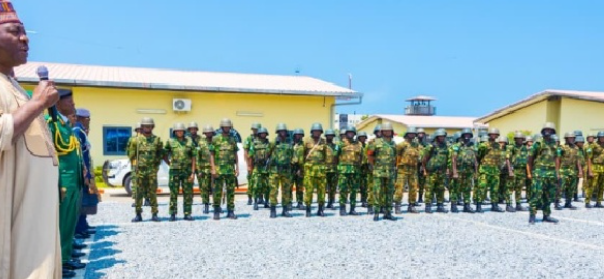
During the visit, the Defence Minister inspected Nigerian Army personnel deployed at Togbin in Cotonou as part of Nigeria’s Peace Support Mission in Benin under Operation ATILEYIN ALAFIA II.
He used the opportunity to reassure the troops that the Federal Government remained committed to their welfare and would continue providing the resources required for their operations.
“A lot of good things that Mr President is preparing for you, we are following up to ensure that you live very well,” Musa told the soldiers.
“We know our job is very, very difficult, and most times people don’t appreciate what we are doing. But God knows we are doing our best, and we are securing Nigeria,” he added.
The Nigerian delegation also visited Benin’s Centre for Post-Conflict Demining and Explosive Ordnance Disposal Operations, as well as the Glo-Djigbe Industrial Zone.
The visits formed part of efforts to explore local capacity-building opportunities under Musa’s intelligence-driven and technology-enabled defence strategy.
The two countries also exchanged ideas on strengthening economic development and industrial cooperation, with discussions linked to ECOWAS trade protocols and the African Continental Free Trade Area.
Musa later met Nigeria’s Ambassador to Benin, Mopelola Ibrahim, during the visit and reaffirmed President Bola Tinubu’s commitment to the welfare of Nigerian military personnel and the promotion of peace and stability across the region.
The minister has since returned to Abuja.
The latest security agreement reflects growing recognition by Nigeria and Benin that criminal networks operating across national boundaries require coordinated responses rather than isolated operations.
With stronger intelligence sharing, joint planning and closer border coordination, both countries hope to make it increasingly difficult for criminals and insurgents to move freely between their territories.