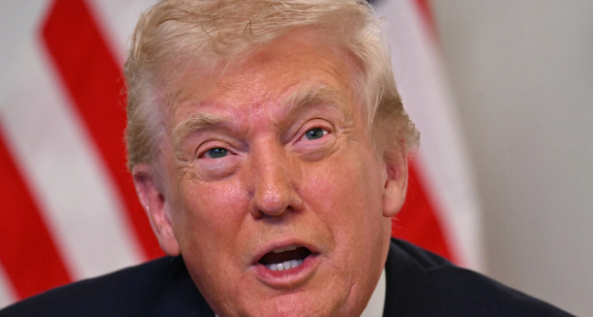
United States President Donald Trump has called on several countries to deploy naval forces to safeguard the Strait of Hormuz, a vital shipping route for global energy supplies that has been disrupted amid rising tensions in the Middle East.
In a statement shared on his Truth Social platform on Saturday, the American leader urged nations affected by the instability in the region to support efforts aimed at keeping the crucial maritime corridor open.
Trump said countries heavily reliant on oil shipments passing through the strait should assist the United States by sending warships to the area to help maintain security and protect commercial vessels.
According to him, the international operation would involve cooperation between the United States and several major economies that depend on uninterrupted oil supplies transported through the strategic passage.
He specifically mentioned nations such as China, France, Japan, South Korea, and the United Kingdom as countries that could contribute naval forces to ensure the safety of shipping in the area.
The Strait of Hormuz is widely regarded as one of the world’s most critical maritime chokepoints.
It serves as a narrow gateway connecting the Persian Gulf with international waters and global shipping routes.
At its narrowest point, the strait measures about 54 kilometres (34 miles) across.
A significant portion of the world’s energy supply flows through the waterway each day.
Energy analysts estimated that roughly one-fifth of global crude oil shipments and large volumes of liquefied natural gas pass through the strait, making it essential to global energy markets.
However, ongoing hostilities involving Iran have severely disrupted maritime activity in the area.
Iranian strikes and military threats have reportedly reduced shipping traffic through the corridor, raising concerns among energy producers and importers worldwide.
Trump indicated that the United States is preparing to begin escorting oil tankers through the strait to ensure their safe passage.
Speaking earlier on Friday, he suggested that the U.S. Navy would soon begin operations to protect commercial shipping vessels moving through the strategic route.
“It will happen soon,” the president said when asked about the timeline for the escort operations.
Despite asserting that U.S. forces had significantly weakened Iran’s military capability, Trump acknowledged that Tehran could still threaten shipping using smaller-scale attacks.
He warned that drones, naval mines, or short-range missiles could still be deployed against vessels navigating the strait.
The U.S. president also delivered a strong warning regarding any further attempts to disrupt navigation in the area.
According to him, American forces would respond aggressively to attacks targeting shipping lanes or naval patrols.
Trump stated that the United States would take all necessary measures to ensure the strait remains open to global trade, including striking hostile positions along the coastline and intercepting vessels involved in potential threats.
The escalation has already triggered volatility in global energy markets, with oil prices rising as traders react to fears of supply disruptions from the Middle East.
The Strait of Hormuz remains one of the most sensitive geopolitical flashpoints in the world, and any prolonged disruption could have major economic consequences for both energy producers and consumer nations across the globe.