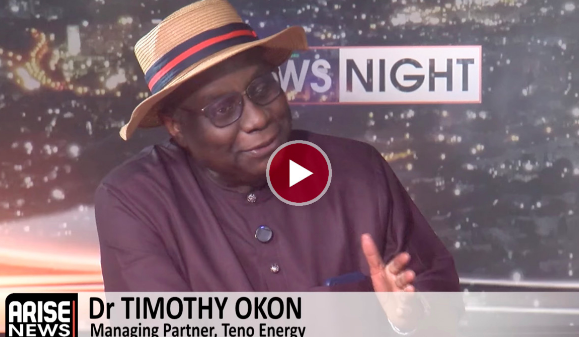
Managing Partner at Teno Energy, Dr. Timothy Okon, has called on Nigeria to urgently implement strategic petroleum product reserves to safeguard the country from global supply disruptions and stabilise fuel availability nationwide.
Speaking in an interview with Arise News on Thursday, Okon said the current pressures in the global oil market are largely driven by external factors rather than domestic challenges.
“The crisis we now face is not of Nigeria’s making, and its consequences stem from what economists would call negative externalities,” he explained.
Okon highlighted that disruptions along key global supply routes, particularly the Straits of Hormuz, have significantly constrained crude availability worldwide, impacting both market stability and pricing.
“The biggest issue, of course, is the Straits of Hormuz, which has now restricted about 20 percent of global crude supply,” he said.
He further noted that Nigeria’s domestic crude supply is already under strain due to prior financial arrangements and obligations tied to crude oil, which limit the volume available for local refining.
“Nigeria has always had an issue because crude is often used to secure financing, among other commitments,” he said.
A key solution, Okon argued, is the implementation of strategic petroleum product reserves, as outlined in Section 181 of the Petroleum Industry Act (PIA).
Such reserves would ensure local refineries have access to sufficient products, reducing reliance on imports during periods of global disruption.
“What you really need is a strategic reserve for petroleum products,” he emphasised.
According to Okon, strategic reserves are typically designed to cover 60 to 90 days of supply, enabling countries to absorb shocks when disruptions occur.
“Usually, that can vary between 60 to 90 days sufficiency, so you can tide yourself over when these events take place,” he explained.
Okon acknowledged that implementing these reserves requires significant infrastructure, careful planning, and strong political will.
He noted that sensitivities around fuel pricing and additional costs have slowed progress in Nigeria.
“Given the sensitivities around pricing, Nigeria may not be very receptive, even though the provisions of the law are there,” he said.
Beyond immediate measures, he advocated for long-term policy planning, including investment in storage facilities and structured reserve systems to secure national fuel availability.
“The strategic product reserve is what we need to implement in both the near and the long term. That has to be done,” he added.
While recognising the importance of renewable energy, Okon stressed that Nigeria must continue to rely on petroleum products in the short term due to existing infrastructure realities.
“We still need to rely on petroleum products; PMS, diesel because that’s what Nigeria currently has,” he said.
Okon also cautioned against returning to a general fuel subsidy, describing it as financially unsustainable and potentially burdensome for government resources.
“What we do not want is a general policy on subsidy. That would be very retrogressive, because it could become an unending commitment,” he warned.
Instead, he recommended targeted economic measures, such as improving wages in the public sector, to help cushion the impact of rising fuel costs on citizens.
“The public sector should increase people’s take-home pay to cushion that effect,” he said.
Additionally, Okon urged the government to use potential revenue gains from high oil prices to reduce national debt and strengthen fiscal stability, rather than expanding recurrent spending.
“That money needs to be saved and used to write down our debt,” he said.
He noted that reducing debt obligations would free up crude volumes for domestic use and enhance Nigeria’s participation in structured crude transactions.
“Once you can pay down your debt, you wouldn’t need to devote those barrels elsewhere,” he explained.