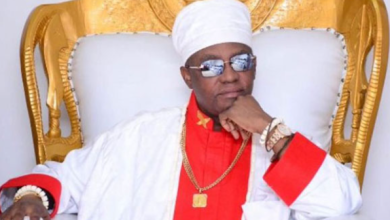
The Federal Government has criticised the coronation and activities of individuals styled as “Eze Ndigbo” in foreign countries, describing the trend as embarrassing and potentially disruptive.
The Minister of State for Foreign Affairs, Bianca Odumegwu-Ojukwu, made this known in a statement issued on Thursday following deliberations at the Imeobi meeting of Ohanaeze Ndigbo Worldwide held in Enugu.
In the statement, released by her media aide, Dr Magnus Eze, the minister described the practice of installing “Igbo kings” outside Nigeria as a source of concern for the government and Nigerians abroad.
According to her, the development has become “a big embarrassment” not only to the Federal Government and the Igbo people but also to host countries where such titles are conferred.
She noted that the National Executive Committee of Ohanaeze Ndigbo Worldwide, in collaboration with the South East Council of Traditional Rulers, had already abolished the concept of Eze Igbo outside Igboland.
Odumegwu-Ojukwu explained that while Igbo associations in the diaspora often organise cultural events to promote their heritage, the introduction of traditional rulership structures abroad has created tensions.
She said such actions have sparked disputes within Igbo communities and strained relations with host communities in foreign countries.
The minister emphasised that cultural expression should not infringe on the sensibilities or established systems of host nations.
Citing a recent incident in South Africa, she recalled that protests erupted in the Eastern Cape following the controversial coronation of Solomon Eziko as “Eze Ndigbo na East London.”
The event, which took place on March 14, 2026, in East London, was reportedly perceived by locals as a challenge to existing traditional leadership structures.
According to the minister, protests began on March 30 and escalated into violence, with demonstrators targeting foreign-owned businesses and vehicles.
She said no fewer than 13 vehicles were destroyed, while at least one stabbing incident was recorded, prompting police intervention using stun grenades and tear gas to restore order.
She added that the Eastern Cape House of Traditional and Khoi-San Leaders condemned the coronation, while South Africa’s Department of Cooperative Governance and Traditional Affairs declared it illegal and contrary to constitutional provisions.
Odumegwu-Ojukwu disclosed that Nigeria’s diplomatic missions intervened to manage the fallout, noting that the Nigerian High Commission in South Africa distanced itself from the event.
She said the mission clarified that the coronation was merely a cultural activity and not an official or recognised traditional institution.
The Nigerian Embassy in Pretoria also issued an apology over the incident and advised Nigerians in South Africa to remain law-abiding and avoid confrontations.
The minister further revealed that the Deputy High Commissioner, Olajide Ogunmadeji, engaged protesters, explaining that the event had been misunderstood and did not constitute a challenge to local authority.
She also recalled a similar incident in Ghana in July 2025, which led to tensions and protests, including calls for Nigerians to leave the country.
Odumegwu-Ojukwu said she had led a delegation to Accra at the time to ease tensions following the crisis.
She urged Ohanaeze Ndigbo to enforce sanctions against individuals who disregard the directive abolishing Eze Ndigbo titles outside Igboland.
Quoting the President-General of the organisation, Azuta Mbata, she reiterated that such titles are not recognised by the Igbo people.
“Anybody who is being awarded that type of title anywhere outside of Igbo land is on his own. It is unknown to the Igbo people,” Mbata said.
He added that the organisation would formally communicate its position to state governments and Nigerian diplomatic missions worldwide.
“The position of Eze Ndigbo anywhere outside Igbo land is hereby alienated and proscribed. That is the position of Ohanaeze Ndigbo worldwide.
“We will determine, in consultation with traditional rulers, appropriate sanctions for violators, which will be enforced at the community level,” he added.
The minister assured that the Ministry of Foreign Affairs would support efforts to disseminate the resolution through Nigerian embassies and high commissions globally.