Global financial markets were jolted on Monday as oil prices surged sharply and equities declined following the collapse of U.S.-Iran peace talks and a blockade order targeting the strategic Strait of Hormuz.
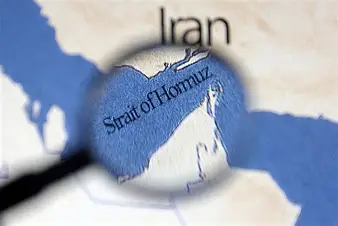
The escalation came after Donald Trump announced that the United States would move to restrict maritime access to the vital Gulf corridor, heightening fears over disruptions to global energy supplies.
Negotiations held over the weekend in Islamabad ended without agreement, with the U.S. delegation—led by Vice President JD Vance—blaming Iran for refusing to abandon its nuclear programme.
Tehran, however, accused Washington of “maximalism, shifting goalposts, and blockade.”
The breakdown of talks dealt a significant blow to hopes of ending the six-week conflict, which has already rattled global markets, driven up crude prices, and stoked inflation concerns.
Oil prices, which had dipped the previous week following a temporary ceasefire agreement, rebounded strongly.
Both major crude benchmarks climbed by around eight percent, pushing prices above the $100-per-barrel mark.
Stock markets across Asia reacted negatively to the developments.
Major indices in Tokyo, Hong Kong, and Seoul each fell by at least one percent, while markets in Shanghai, Sydney, Singapore, Taipei, and Jakarta also recorded losses.
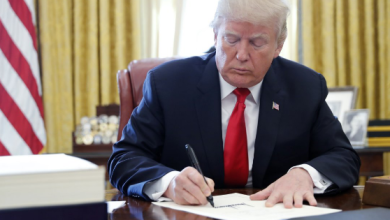
In a social media statement, Trump said the objective of the blockade was to eventually clear the strait of mines and restore safe navigation.
However, he stressed that Iran must not be allowed to benefit economically from controlling the route, through which roughly one-fifth of the world’s oil and gas supplies typically pass.
“Effective immediately, the United States Navy… will begin the process of BLOCKADING any and all ships trying to enter, or leave, the Strait of Hormuz,” he said, warning of severe consequences for any hostile action.
He clarified that the restrictions would apply specifically to vessels travelling to or from Iranian ports, while the U.S. military indicated that enforcement would begin at a set time, effectively placing maritime traffic under tight control.
Iran’s Revolutionary Guards responded by asserting dominance over the waterway, warning that any adversary attempting to challenge its authority could face dire consequences.
The country’s navy leadership dismissed the U.S. threat as exaggerated.
Following the failed talks, Vance said Washington had presented its “final and best offer,” adding, “We’ll see if the Iranians accept it.”
Iran’s Foreign Minister Abbas Araghchi said both sides had come close to reaching a deal, noting that Iran had engaged “in good faith” but encountered shifting demands.
Analysts said the standoff underscores deep-rooted mistrust between both countries.
Nicole Grajewski of Sciences Po warned that a blockade would not be seen as a symbolic move but rather a serious escalation akin to a return to open conflict.
Market analyst Fawad Razaqzada also pointed to the persistent lack of trust between the long-time adversaries as a key obstacle to any resolution.
Investors are also closely watching efforts to de-escalate tensions elsewhere in the region, particularly between Israel and Hezbollah, amid fears that a broader conflict could further destabilise global markets.
Nawaf Salam said his government is working to secure the withdrawal of Israeli forces and ensure the safe return of displaced persons, while continuing efforts to halt the conflict.
The prolonged crisis has heightened inflationary pressures worldwide, as rising energy costs feed into consumer prices.
In the United States, recent data showed inflation climbing to 3.3 per cent in March, its highest level in nearly a year.
As uncertainty lingers, investors remain cautious, with expectations that central banks may keep interest rates elevated for longer to contain inflation, further weighing on global economic growth.