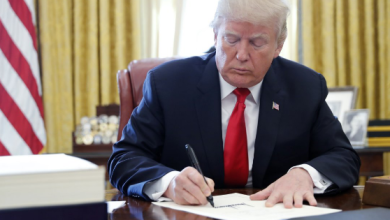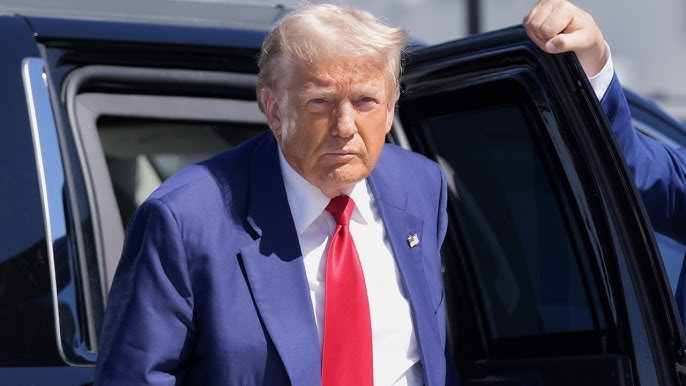
U.S. President, Donald Trump has directed the United States Navy to impose a blockade on the strategic Strait of Hormuz following the breakdown of nuclear negotiations with Iran, marking a sharp escalation in tensions in the region.
The directive, issued on Sunday, comes after talks aimed at curbing Iran’s nuclear ambitions ended without agreement, prompting Washington to adopt a more aggressive stance toward Tehran.
Iran’s Revolutionary Guards swiftly responded, warning that they maintain full control over traffic in the vital waterway and would confront any attempt to challenge their authority.
They cautioned that hostile forces risk being drawn into what they described as a “deadly vortex” if they make the wrong move in the strait.
In a detailed statement posted on his social media platform, Trump said the immediate objective is to prevent Iran from benefiting economically from its grip on the passage, while longer-term plans include clearing the route of naval mines and restoring unrestricted global shipping.
“Effective immediately, the United States Navy, the finest in the world, will begin the process of BLOCKADING any and all ships trying to enter, or leave, the Strait of Hormuz,” Trump declared.
“Any Iranian who fires at us, or at peaceful vessels, will be BLOWN TO HELL!”
The Strait of Hormuz is one of the world’s most critical energy corridors, serving as a major transit route for oil, gas, and fertiliser shipments from the Gulf to international markets.
Iran has already been restricting access through the channel, reportedly allowing passage mainly to vessels linked to allied countries such as China.
There are also unconfirmed indications that Tehran may impose tolls on ships using the route.
Condemning such actions, Trump described the situation as “world extortion,” adding: “I have also instructed our Navy to seek and interdict every vessel in international waters that has paid a toll to Iran.
”No one who pays an illegal toll will have safe passage on the high seas. We will also begin destroying the mines the Iranians laid in the straits.”
In a subsequent interview, Trump threatened further economic and military measures, including a potential 50 percent tariff on Chinese imports if Beijing is found to be assisting Iran militarily.
“I could take out Iran in one day. I could have their entire energy—everything, every one of their plants, their electric generating plants, which is a big deal, ” he said.
The latest developments follow failed negotiations held in Islamabad, where senior officials from both countries met in a bid to halt the six-week conflict.
The war began after coordinated strikes by the United States and Israel on Tehran, which reportedly resulted in the death of Iran’s supreme leader, Ali Khamenei.
The American delegation to the talks included Vice President JD Vance, envoy Steve Witkoff, and Trump’s son-in-law Jared Kushner.
“I have always said, right from the beginning, and many years ago, IRAN WILL NEVER HAVE A NUCLEAR WEAPON!” Trump reiterated, underscoring his administration’s long-standing position.
He added that the blockade would begin shortly and hinted that other nations could join the effort, though he did not specify which countries might be involved.
Officials familiar with the negotiations said Iran’s insistence on maintaining its nuclear programme described by Tehran as peaceful but viewed with suspicion by Western powers—remained a major obstacle to reaching a deal.
Iran’s parliamentary speaker, Mohammad Bagher Ghalibaf, who led his country’s delegation, said Tehran had presented “constructive initiatives,” but accused the other side of failing to build sufficient trust during the talks.
The collapse of negotiations has heightened fears of renewed conflict, with potential consequences for global energy markets and regional stability.
Analysts warned that any disruption in the Strait of Hormuz could trigger a surge in oil prices and further strain already fragile supply chains.
Residents in Iran have expressed growing anxiety over the uncertainty. “We feel despair and hopelessness. We are tired of this uncertainty,” said a Tehran-based resident, reflecting public concern over the prospect of renewed hostilities.
International leaders have urged both sides to maintain a ceasefire and return to dialogue.
Ishaq Dar called on all parties to respect the truce, noting Pakistan’s continued willingness to facilitate negotiations.
Similarly, Keir Starmer emphasised the importance of avoiding further escalation during discussions with Haitham bin Tariq.
Russia also signalled its readiness to mediate, with President Vladimir Putin holding talks with Iran’s President Masoud Pezeshkian and offering support for a diplomatic resolution.
Despite these appeals, the situation remains volatile, with the risk of renewed military confrontation looming over the Gulf region.