The Independent National Electoral Commission (INEC), has dismissed allegations that its chairman, , was responsible for a controversial social media post supporting the (APC), stating that no verified forensic evidence connects him to the account.
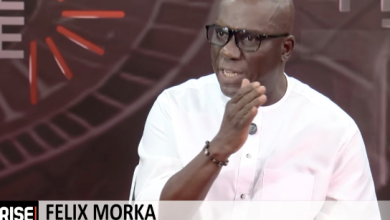
The clarification was provided by INEC’s Director of Information and Communication Technology, Lawrence Bayode, during an appearance on Channels Television’s The Morning Brief on Monday.
“Even though we are seeing that some guys have carried out a forensic investigation on that account, as we speak, there is no verified forensic evidence linking the chairman to the post,” Bayode said.
The controversy followed the circulation of a post allegedly linked to Joash Amupitan, which appeared to express partisan support during the 2023 general elections, raising concerns about the neutrality of the electoral body.
Despite dismissing the claim, Bayode stressed that the commission is treating the matter seriously and has referred it to security agencies for further investigation.
“We are taking this further even though we have referred this to security agencies, and as I said, we rely on evidence.
”We are also going to be engaging a third-party forensic expert to help look at this.
“We are also looking at it in-house. I will not base my judgment on the screenshot; I will not allow that to guide my conclusion.
”I know that the commission will engage a third-party expert to also look at this, and that will guide the conclusion of the commission,” Bayode added.
Bayode cautioned against overreliance on artificial intelligence tools in verifying sensitive information, noting that such systems can produce misleading outputs.
“ honestly can hallucinate just like any modern artificial intelligence system, and I think the key is to verify important information, especially for decision or public communication.
“So any AI system can hallucinate, and so Grok can also hallucinate,” Lawrence Bayode stated.
He also pointed out that social media accounts can be created or manipulated using another person’s identity, warning of the risks of digital impersonation.
“If people can hack into your system if it’s not well protected, if not for a time like this where our social media platforms are protected by two-factor authentication,” Bayode said.
The ICT director further suggested that the account in question may have been altered, with its content potentially manipulated to mislead the public.
“That account was renamed; the content there, maybe, would have been manipulated again,” Bayode explained, adding that such tactics could easily be exploited.
“I think all these are in the public domain, so anyone who wants to create havoc can use all of this information and use it as they will,” Bayode added.
INEC maintained that investigations were ongoing and assured that its final position would be guided strictly by verified evidence.