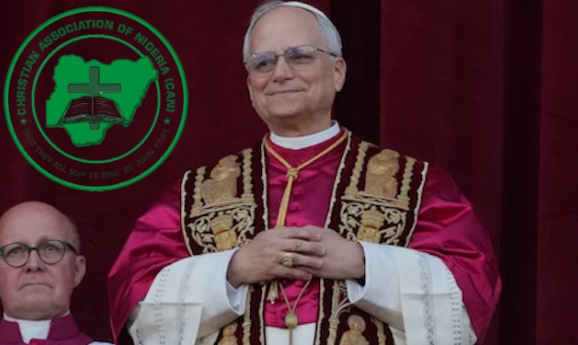
Pope Leo XIV has expressed regret that his recent remarks were widely interpreted as a response to criticism from U.S. President Donald Trump, stressing that he has no desire to engage in any form of public dispute with the American leader.
Speaking to journalists on Saturday while en route to Angola, the pontiff clarified that a speech he delivered earlier in Cameroon, in which he referenced “tyrants” destabilising the global order had been prepared well before Trump publicly stated he was “not a big fan” of the pope.
“And yet it was perceived as if I were trying to start a new debate with the president, which doesn’t interest me at all,” Leo said, distancing himself from any suggestion of a political exchange.
The controversial remarks were part of a broader address given during the second leg of his African tour, where he spoke candidly about global instability and moral leadership.
However, the timing of the speech, coming shortly after Trump’s comments, led to speculation that the pope was responding directly.
In a related development, the pope also used his visit to Cameroon to raise alarm over the growing influence of artificial intelligence, warning that its misuse could deepen societal divisions.
Addressing an audience at the Catholic University of Central Africa in Yaoundé, he cautioned against the deployment of AI technologies in ways that promote “polarisation, conflict, fear and violence.
“The challenge posed by these systems is greater than it appears: it is not just about the use of new technologies, but about the gradual replacement of reality by its simulation,” he said.
He also warned that such a shift could have profound implications. “In this way, polarisation, conflict, fear and violence spread.
”What is at stake is not merely the risk of error, but a transformation in our very relationship with truth,” the pontiff added.
The remarks form part of a series of increasingly forthright interventions by Pope Leo during his ongoing 11-day tour of Africa.
The trip has marked a noticeable shift from his earlier cautious tone, as he delivers stronger appeals for global peace and ethical responsibility in the face of modern challenges.
His latest comments underscore the Vatican’s growing concern over both political tensions and the ethical dimensions of emerging technologies, even as the pope reiterates his reluctance to be drawn into direct political confrontation.