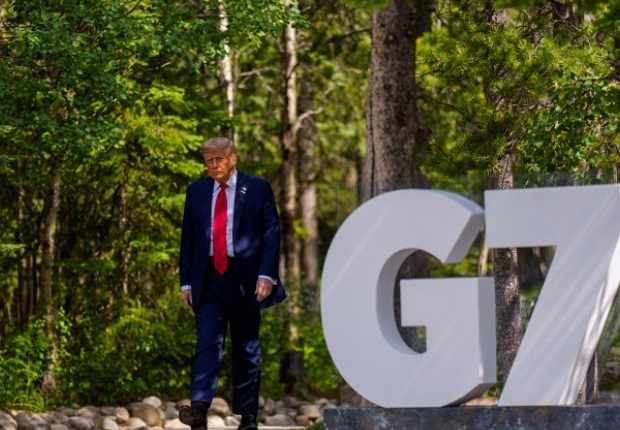
Trade ministers from the Group of Seven (G7) leading economies are set to convene in Paris on Tuesday and Wednesday for high-level discussions on global trade challenges, though the latest United States tariff threats against European vehicles will not be formally addressed within the forum.
The meeting brings together trade officials from Britain, Canada, France, Germany, Italy, Japan, and the United States under France’s G7 presidency, with a focus on issues such as critical mineral supply chains, global industrial capacity, and the growing impact of small-package e-commerce on international trade systems.
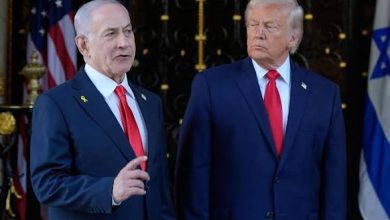
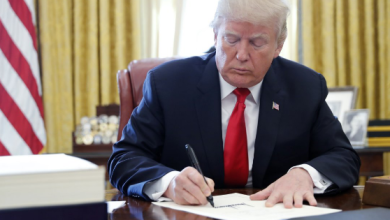
However, despite rising tensions in global markets, officials confirmed that President Donald Trump’s recent announcement threatening increased tariffs on cars and trucks imported from the European Union would be handled separately from the G7 agenda.
Trump had signaled last Friday his intention to raise tariffs on EU automotive exports, adding further strain to already delicate transatlantic trade relations.
Although the issue is expected to dominate bilateral discussions, it will not be formally tabled during the G7 ministerial session.
Instead, U.S. Trade Representative Jamieson Greer is expected to hold separate talks in Paris with European Union Trade Commissioner Maroš Šefčovič, alongside meetings with French officials including Economy Minister Roland Lescure.
EU and U.S. trade relations had previously seen an agreement last year to cap tariffs on EU autos and parts at 15 per cent, a rate lower than the 25 per cent duties imposed on several other trading partners.
However, implementation of that arrangement remained subject to ongoing political approval within EU member states.
French officials have indicated a cautious approach to the latest developments, stressing that the bloc does not intend to escalate tensions through the G7 platform.
“Our position for the moment is not to overreact,” a statement from the French trade ministry said, adding that any further discussions on the matter would take place within European frameworks rather than the G7.
Broader Trade Agenda Dominates Talks
Beyond tariff tensions, ministers are expected to focus on four key priorities set by France as chair of the group.
Central among them is addressing industrial overcapacity, widely seen as distorting global trade flows and affecting competitiveness in multiple sectors.
While China is not directly named on the agenda, its state-backed industrial policies are widely understood to be a key factor driving the discussions.
Another major topic is economic security, particularly the need to secure and diversify access to critical minerals essential for modern industries, including semiconductor production, electric vehicle batteries, and advanced electronics.
France is also expected to push proposals for closer coordination among producing and consuming nations to strengthen supply chain resilience and promote shared standards.
Ministers would further examine the rapid expansion of cross-border e-commerce, which has led to a surge in low-value parcel shipments that often bypass traditional customs systems.
This trend has raised concerns among domestic retailers over unfair competition and revenue losses.
The United States has already moved to suspend duty-free treatment for small parcels valued under $800, while the European Union is preparing to introduce a flat customs charge on packages under €150.
Trade officials are also expected to reflect on the stalled World Trade Organization (WTO) negotiations, with participants acknowledging the need to reform the global trade body, which has struggled with enforcement and dispute resolution challenges in recent years.
The ministerial meeting serves as a precursor to the broader G7 Leaders’ Summit scheduled for mid-June in Evian, France, where heads of state will further deliberate on global economic stability, security concerns, and geopolitical tensions affecting international trade.
As global markets remain unsettled by energy disruptions and geopolitical conflicts, the Paris talks are expected to set the tone for how major economies coordinate their responses to rising trade fragmentation.