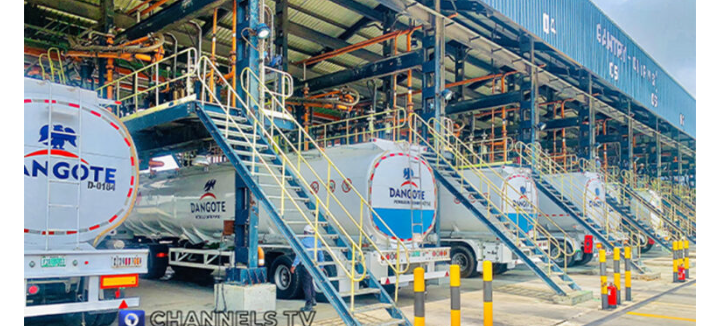
The Dangote Petroleum Refinery has started direct deliveries of aviation fuel to international airlines, including Ethiopian Airlines, as global energy markets tighten amid geopolitical tensions involving the United States and Iran.
The development marks a new phase for the refinery as it expands its export operations beyond Nigeria, supplying jet fuel, diesel, and petrol to international destinations after meeting strong domestic demand.
Speaking at an energy conference in Lagos, Managing Director David Bird said the facility is now actively exporting refined products following a rise in production capacity.
According to him, the refinery is also strengthening its focus on African markets while gradually expanding its global reach.
He noted that surplus production is being directed to neighbouring countries as part of a wider regional supply strategy.
“We’re proud to have done a direct delivery to Ethiopian Airlines, and we will continue to export surplus production to neighbouring African countries,” Bird said.
He explained that the refinery is currently operating at full capacity after completing maintenance activities, enabling it to respond to increasing demand for aviation fuel across different markets.
Rising crude oil prices, which have reached about $112 per barrel, are increasing pressure on aviation fuel costs worldwide.
Bird said the bigger concern for many countries is not just high prices but limited availability of supply.
“What is worse than $100 or $120 oil is no oil at all,” he said, pointing to shortages affecting import-dependent countries such as Australia, Bangladesh, Sri Lanka, and the Philippines.
Despite global volatility, he maintained that Nigeria’s domestic fuel situation remains stable due to increased refining capacity, crediting recent investments in the sector for reducing dependence on imported refined products.
The refinery is producing large volumes of jet fuel daily, with estimates placing output at about 24 million litres per day.
While a portion is supplied to Nigerian airlines, a significant share is exported to international markets, particularly Europe.
Industry reports suggested strong profit margins on jet fuel exports, especially as European demand rises during peak travel seasons.
Some estimates indicated that imports from Nigeria to Europe have reached record levels in recent months.
Analysts also noted that profit margins at the facility are significantly higher than those of many European refiners, supported by large-scale production and access to locally sourced crude oil.
While exports continue to grow, domestic airlines in Nigeria are facing rising operational costs due to high fuel prices.
Industry operators have warned that sustained price increases could disrupt flight operations if the trend continues.
This situation highlights the growing tension between export opportunities and domestic supply affordability.
The refinery sources crude oil from multiple regions, including the United States, Africa, and Brazil, positioning it as a major player in the international refined fuel market.
Originally designed to make Nigeria a net exporter of petroleum products, the facility is increasingly influencing fuel distribution patterns across Africa and beyond, even as global energy markets remain unstable.