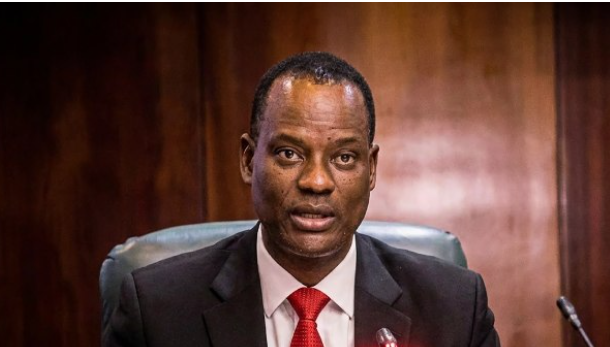
The Minister of Finance and Coordinating Minister of the Economy, Taiwo Oyedele, has reaffirmed that the Federal Government will not reinstate fuel subsidy despite growing public concern over rising living costs.
Oyedele made this position known on Tuesday in Paris during a meeting with international investors alongside President Bola Tinubu.
According to the minister, fuel subsidies historically introduced economic “distortions,” stressing that petrol pricing will remain deregulated.
He explained that the government is confident market forces can determine fair pricing without state intervention.
Since the removal of the subsidy in May 2023, Nigeria has experienced a sharp rise in inflation, reaching levels not seen in nearly two decades.
Headline inflation climbed from 22.41 per cent in May 2023 to 34.19 per cent by June 2024, largely driven by increased fuel, food, and transportation costs, worsening the cost-of-living crisis.
The upward trend persisted in subsequent months following the policy announcement in June 2023.
Food inflation alone surpassed 39 per cent by October 2024, reflecting the deepening pressure on households.
Analysts noted that the subsidy removal, coupled with currency devaluation, significantly pushed transport costs up by nearly 300 per cent, further increasing poverty levels across the country.
“We will not bring back fuel subsidy because it creates distortions for the economy, and we won’t introduce price control because we believe in the market,” Oyedele stated.
He added that global developments, including tensions involving Iran, could present fresh opportunities for Nigeria as countries seek alternative energy sources and investment destinations.
Earlier at the same event, President Tinubu told investors that Nigeria’s foreign exchange market has stabilised following the elimination of the subsidy, which he described as a major financial burden.
“Subsidy that was a burden to the entire country was removed, and ever since we have achieved FX stability,” Tinubu said, according to a statement by his aide, Dada Olusegun.
President Tinubu, who began a three-nation trip on Sunday, reiterated that his administration’s reform programme is designed to stabilise key economic indicators while laying the groundwork for sustained growth.
He further pledged to deepen reforms, improve transparency in the oil sector, and implement a comprehensive security strategy, including decentralising policing and tackling terrorist financing.
“The focus remains on policy stability and diligent execution to ensure these strategic shifts translate into concrete benefits for all Nigerians,” the President said.
Some investors at the meeting praised the government’s reform efforts and expressed optimism about Nigeria’s economic outlook.
One participant queried Tinubu about his plans beyond 2027, to which he responded by promising continued fiscal discipline, transparency, and consistent policy direction.
In a separate statement, presidential adviser Bayo Onanuga highlighted that the administration’s reform agenda is focused on eliminating economic inefficiencies and strengthening macroeconomic stability to support long-term inclusive growth.
He emphasised that transparency and fiscal discipline remain central to the government’s approach, noting that the swift implementation of reforms was necessary to address structural challenges.
At the meeting, President Tinubu reiterated his administration’s commitment to sustaining economic reforms and ensuring policy consistency.
Oyedele also pointed to improvements in Nigeria’s economic performance, revealing that the country recorded 11.2 percent GDP growth in dollar terms in 2025.
He said this progress supports Nigeria’s ambition of becoming a $1 trillion economy by 2030.
The minister added that the government’s immediate priority is to ensure that the benefits of these reforms are felt by citizens.
He also pledged to begin publishing quarterly financial reports to enhance transparency.
Meanwhile, the Director-General of the Debt Management Office, Patience Oniha, assured investors that the government remains committed to responsible borrowing and sustainable debt practices.
The investor meeting included representatives from major global institutions such as Citibank and Amundi, led by Valerie Baudson, alongside firms like BlueCrest, Ninety One, Kirkoswald Capital, Principal Finisterre, and U.S.-based PGIM and Mesarete Capital.