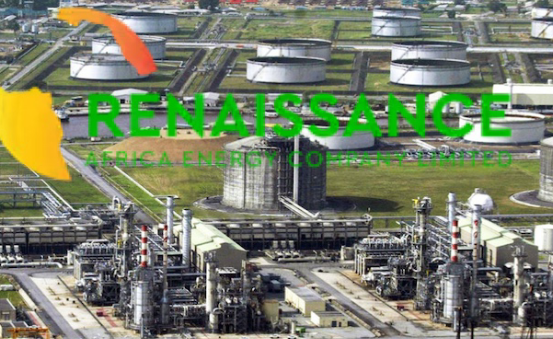
Renaissance Africa Energy Company, operator of the NNPC/Renaissance/TotalEnergies/AENR Joint Venture, has announced plans to increase its crude oil production to 500,000 barrels per day (bpd) by 2030, in line with national efforts to boost Nigeria’s oil output.
The company said the production target is not only focused on volume but also on delivering broader economic value, including benefits for people and environmental sustainability.
Vice President, Relations and Sustainable Development at Renaissance, Igo Weli, disclosed this on Thursday during the flag-off of a four-day community health outreach programme in B-Dere and neighbouring communities in Gokana Local Government Area of Rivers State.
The programme, tagged “B-Dere Vision First Plus,” was organised by Renaissance Africa JV in partnership with the Kolmarg Eyesight Foundation.
Weli, represented by the General Manager, Health, Dr. Akinwumi Fajola, said the company’s growth strategy also prioritises domestic gas utilisation as a key driver of Nigeria’s industrial development.
He noted that Renaissance is working to restore Nigeria’s production capacity, adding that the company has already increased national crude output by over 200,000 bpd while supplying about 1.9 billion cubic feet of gas daily to the Bonny LNG facility for industrial use.
“You would have read the many media reports that highlight how we continue to support oil and gas production in Nigeria.
” Along with an impressive target of 500,000 barrels of oil by the year 2030, we continue to bring the spotlight on domestic gas utilisation and how we can make this a catalyst to power our nation’s industrialisation,” he said.
“Renaissance’s declared vision is to be a leading African energy company providing energy security.
”Renaissance is helping Nigeria reclaim production momentum, boosting national crude output by over 200,000 barrels per day and delivering 1.9 billion cubic feet of gas daily to Bonny NLNG within and industrialisation in a sustainable manner, ” he added.
Weli explained that the eyecare initiative reflects the company’s commitment to improving living standards in its host communities, restoring dignity, and promoting better health outcomes.
He also noted that global statistics show over 2.2 billion people suffer from visual impairment, with nearly half of these cases either preventable or treatable, including millions in Nigeria affected by conditions such as cataracts and refractive errors.
He expressed appreciation to the Rivers State Government, the Ministry of Health, and relevant agencies for their collaboration, as well as joint venture partners including NNPC Limited through NUIMS, TotalEnergies, and AENR for their continued support.
Representing NUIMS Chief Upstream Investment Officer, Mr. Seyi Omotowa, Head of Business Services, Nkechi Anaedobe, said the joint venture remains committed to improving livelihoods in host communities.
She disclosed that the outreach programme had already exceeded expectations, moving beyond its initial target of 5,000 beneficiaries.
“I know we had over 5,000 as our target and we’re on track to not only meet that but to surpass it as well,” she said.
In a separate development, energy giant Shell reported first-quarter profits of $6.9 billion, its highest in two years, surpassing market expectations due to gains linked to geopolitical tensions affecting global energy markets.
The company also increased its dividend by five per cent but reduced its share buyback programme to $3 billion from $3.5 billion in order to preserve liquidity amid rising debt levels caused by supply disruptions.
Chief Financial Officer, Sinead Gorman, said the dividend increase reflects confidence in the company’s long-term cash flow outlook, adding that further buyback adjustments remain possible depending on market conditions.
Shell’s adjusted earnings rose from $5.58 billion a year earlier to $6.92 billion, beating analyst projections of $6.36 billion.
However, production declined by four per cent due to outages in Qatar following damage to the Pearl gas-to-liquids facility, with repairs expected to take up to a year.
The company also projected further declines in second-quarter output due to ongoing disruptions, including reduced liquefied natural gas production.
Shell noted that its trading division benefited from increased market volatility linked to global geopolitical tensions, even as higher debt levels pushed its gearing ratio to 23.2 per cent.
The company said cash flow was affected by fluctuations in inventory values but expects improvements over time as energy prices stabilise