Fresh controversy has trailed the recent Memoranda of Understanding (MoUs) signed by the NNPC Limited with two Chinese firms for the rehabilitation and operation of the Port Harcourt and Warri refineries, amid renewed calls for Nigeria to prioritise indigenous companies with proven technical capacity.
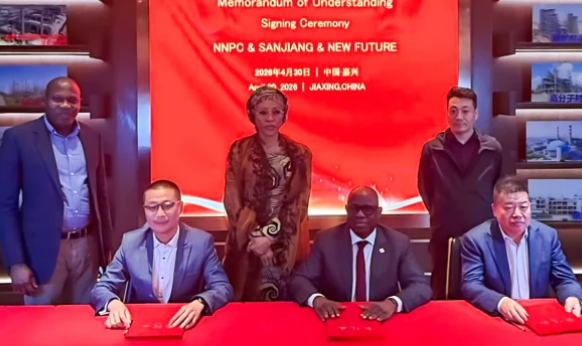
The agreements, signed with Sanjiang Chemical Company Limited and Xinganchen (Fuzhou) Industrial Park Operation and Management Company Limited, are part of plans to establish a technical equity partnership aimed at completing rehabilitation works, expanding refining capacity, and integrating petrochemical and gas-based industrial development around the facilities.
NNPC said the initiative followed over six months of engagements and would support refinery revival and broader industrial growth. However, the development has triggered criticism across sections of the oil and gas industry.
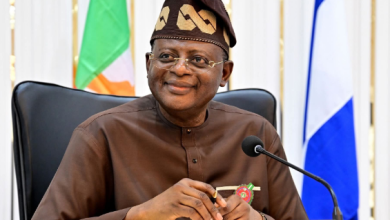
Former President of the Organised Private Sector of Nigeria (OPSN), Dele Oye, questioned the competence of the Chinese firms, arguing that neither has a verifiable track record in refinery rehabilitation or operations comparable to established global engineering, procurement and construction (EPC) companies such as Saipem and Tecnimont.
Speaking on ARISE Television on Thursday, Oye said Sanjiang Chemical Company was primarily a downstream chemical operator, not an EPC firm, and lacks refinery construction or rehabilitation experience.
“The first company, Sanjiang Chemicals, is not an EPC company. It’s not an engineering company. They are into the downstream sector… They’ve never run any refinery. They’ve never rehabilitated one,” he said.
He also described the second firm, Xinganchen, as a company focused on industrial park and real estate management with no known refinery expertise.
Oye also questioned the financial capacity of the firms, citing concerns over declining liquidity and short-term borrowing exposure, and argued that both companies fall short of the technical requirements for such complex refinery projects.
Industry analysts have also renewed calls for greater involvement of indigenous energy firms, noting that Nigeria now has stronger upstream and midstream operators capable of contributing to large-scale energy infrastructure development.
Companies such as Conoil Producing, Seplat Energy, First E&P, and Renaissance Africa Energy Holdings were cited as examples of local operators with growing technical and financial strength following acquisitions of divested international oil company assets.
For instance, Seplat recently expanded its portfolio after acquiring Mobil Producing Nigeria Unlimited assets from ExxonMobil, while First E&P has maintained a strong operational presence in the Niger Delta through joint ventures.
Renaissance Africa Energy also led the consortium that acquired Shell Petroleum Development Company’s onshore assets.
Although these firms are not primarily refinery engineering contractors, experts suggest that Nigeria could adopt a consortium model combining indigenous operators with established EPC firms, similar to global best practices.
They also pointed to the success of the Dangote Refinery as evidence that large-scale refining projects are achievable through private capital, technical partnerships, and structured execution frameworks.
The debate comes amid lingering questions over earlier refinery rehabilitation contracts awarded under past administrations.
In 2021, the federal government approved $1.5 billion for the rehabilitation of the Port Harcourt refinery, awarded to Tecnimont SpA, while an additional $1.48 billion was approved for the Warri and Kaduna refineries, awarded to Saipem and its Nigerian subsidiary.
Despite reported milestones, the facilities have continued to experience repeated shutdowns and operational setbacks, with current output still effectively at zero.
The Economic and Financial Crimes Commission (EFCC) is reportedly reviewing aspects of the contracts, further heightening scrutiny of refinery rehabilitation spending.
Energy analyst Dan Kunle described the new MoUs as unnecessary, arguing that the refineries should instead be privatised transparently under the National Council on Privatisation.
He also maintained that the Chinese firms lack refinery ownership or operational experience, describing the arrangement as a “futile exercise.”
Similarly, the Centre for Energy Sector Transparency faulted the agreements, warning that repeated refinery interventions without accountability risk undermining fiscal discipline.
“What Nigerians are witnessing is a troubling pattern of policy repetition without reflection,” said its Executive Director, Dr. Oghenetega Edafe.
Despite the criticism, NNPC maintained that the MoUs were part of efforts to establish sustainable technical and commercial frameworks for Nigeria’s refining assets.
The company said any final investment decision would still undergo due process, including approvals and detailed negotiations before implementation.