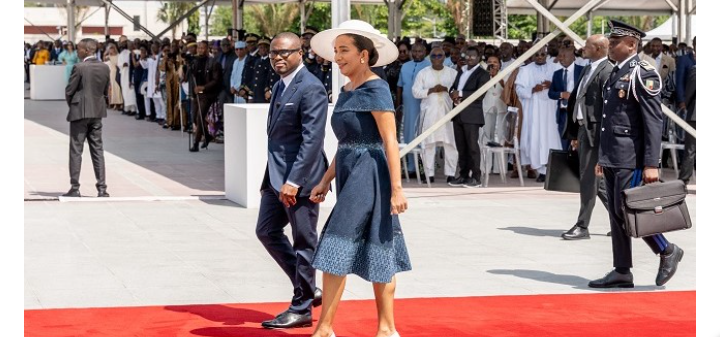
Former Benin finance minister Romuald Wadagni was officially sworn in as president on Sunday, succeeding his longtime political ally and former boss, Patrice Talon, after a decade of Talon’s leadership.
The inauguration ceremony took place at the Palais des Congres in Cotonou, where regional leaders, government officials, and foreign dignitaries gathered to witness the transfer of power.
Wadagni, a respected economist widely seen as a technocrat, won the April 12 presidential election with more than 94 percent of the votes cast.
His only challenger, Paul Hounkpe, suffered a heavy defeat, while Hounkpe’s political party later aligned with Wadagni’s camp in parliament, further strengthening the new president’s political base.
Benin’s main opposition party, the Democrats, did not participate in the election after failing to secure enough endorsements amid internal divisions within the party.
During his inaugural address, Wadagni pledged to lead the country with integrity and a strong sense of responsibility.
“I will serve Benin with integrity, courage and commitment,” the new president declared.
“I will serve with the constant knowledge that power is never a personal privilege,” he added.
The 49-year-old leader takes charge of a country that has experienced significant economic growth over the last decade but still struggles with deep social inequality and growing insecurity in its northern region.
Benin has increasingly faced attacks linked to jihadist groups operating across the Sahel, particularly militants associated with Al-Qaeda’s regional affiliate, the Group for the Support of Islam and Muslims (JNIM).
Wadagni acknowledged the security challenges confronting the nation and promised firm action against armed groups threatening national stability.
“Benin will not give in to fear nor complacency. The government will be firm against all those who threaten our unity and security,” he said.
His administration is also expected to focus on improving diplomatic relations with neighbouring Niger and Burkina Faso, both of which are currently under military rule and battling extremist violence.
Relations between Benin and the two countries have been strained in recent years due to political tensions and security concerns along shared borders.
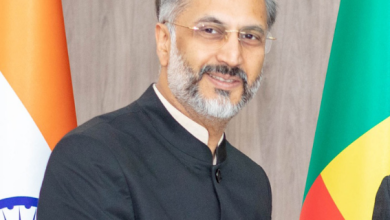
In what observers described as a sign of easing tensions, Niger’s Prime Minister, Ali Mahaman Lamine Zeine, attended the inauguration ceremony and received applause from guests present at the event.
Wadagni begins his presidency with a seven-year mandate following constitutional reforms introduced last year, extending the presidential tenure from five years to seven years.
Under Benin’s constitution, a president is permitted to serve a maximum of two terms in office.
Before becoming president, Wadagni spent 10 years as finance minister under Talon’s administration, where he gained recognition for overseeing major economic reforms.
During his tenure at the finance ministry, Benin improved its public finances and reduced its budget deficit by nearly one-third to about three percent of the country’s Gross Domestic Product (GDP).
Political analysts believed Wadagni’s economic background and close association with Talon signal continuity in government policy, particularly in the areas of economic management, infrastructure development, and regional cooperation.
Despite the country’s economic progress in recent years, many citizens continue to face poverty and widening inequality, issues the new administration is expected to address alongside mounting security threats in the north.