The Nigerian Navy says it has acquired more than 100 warships and boats since its establishment 70 years ago, highlighting decades of expansion and maritime security operations across the country’s waters.
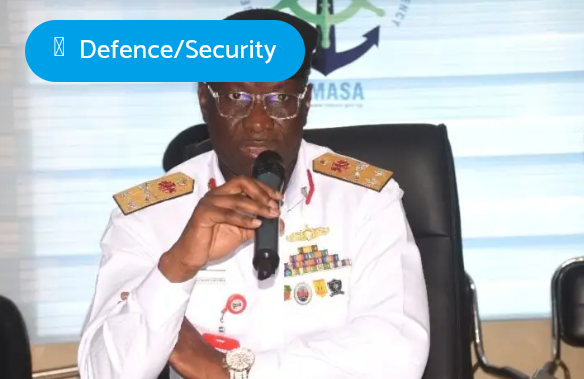
This was disclosed on Sunday in Onne, Rivers State, by Rear Admiral Ebiobowei Zipele, Flag Officer Commanding, Naval Training Command (NAVTRAC), during an interdenominational church service marking the Navy’s 70th anniversary.
Zipele described the milestone as a significant moment in the history of the naval service, noting that the force has remained resilient, committed, and effective in carrying out its constitutional duties since 1956.
He explained that the Nigerian Navy, which started operations with 11 ships inherited from the British Royal Navy, has now grown into a stronger maritime force with over 100 ships and boats in its fleet.
According to him, the Nigerian navy started in 1956 with 11 ships bequeathed by the (British) Royal Navy, but today we have over 100 ships and boats in our fleet.
Despite the progress, the naval commander noted that the service continues to expand its capabilities with the acquisition of additional warships, helicopters, and drones to enhance maritime surveillance and security operations.
He also stated that the Navy has recorded significant success in reducing piracy within Nigeria’s waters and the Gulf of Guinea over the past three years, a development he said has improved investor confidence and boosted commercial maritime activities.
“The achievement has restored investor’s confidence and improved commercial activities within the maritime sector,” he said.
Zipele added that the Navy has remained effective in safeguarding Nigeria’s territorial waters despite limited resources, while also strengthening operations through the establishment of an air arm unit.
He, however, stressed that securing Nigeria’s vast maritime domain cannot be achieved by the Navy alone, calling for stronger collaboration among relevant security and regulatory agencies.
“The government adopted a ‘whole-of-society’ approach because the Nigerian navy cannot be everywhere at the same time,” he explained.
He listed supporting agencies to include the Nigerian Maritime Administration and Safety Agency (NIMASA), Nigerian Ports Authority (NPA), Nigerian Customs Service (NCS), Nigerian Immigration Service (NIS), and Tantita Security Services.
Zipele commended President Bola Tinubu for providing improved operational support and equipment to the Navy, while also praising the Chief of Naval Staff, Vice Admiral Idi Abbas, for boosting morale within the service.
He urged young Nigerians interested in joining the Navy to understand that military service requires discipline, sacrifice, and patriotism.
“There is no greater sacrifice than laying down our lives for our country,” he said.
The naval chief further noted that the Armed Forces remain actively engaged in nationwide operations against banditry, terrorism, oil theft, and illegal bunkering activities.