A United States federal judge has declined to halt President Donald Trump’s executive order tightening rules on mail-in voting, marking an early setback for Democratic Party efforts to stop the policy ahead of the November midterm elections.
The ruling comes amid heightened political tension as both Republicans and Democrats position themselves for a closely contested battle for control of Congress.
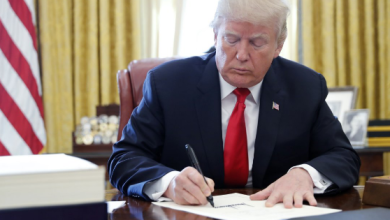
President Trump signed the executive order on March 31, directing federal agencies to compile a verified list of U.S. citizens eligible to vote in each state and to assist state authorities in strengthening voter verification processes.
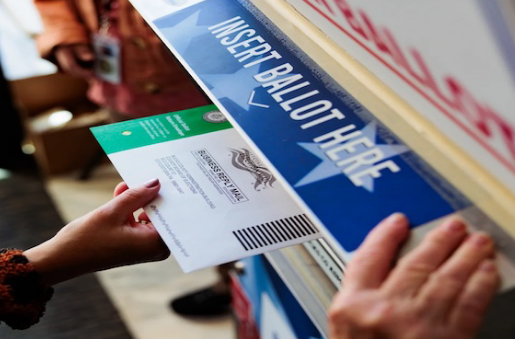
The order also instructs the US Postal Service to deliver mail-in ballots only to individuals listed on state-approved voting registers and requires states to retain election-related records for at least five years.
The policy has been strongly criticised by Democrats, who argue it could disenfranchise millions of voters by introducing federal barriers to state-run election systems.
In the lawsuit challenging the order, plaintiffs including Senate Minority Leader Chuck Schumer of New York argued that the directive infringes on states’ constitutional authority to manage elections.
However, U.S. District Judge Carl Nichols ruled on Thursday that the case was filed too early because federal agencies had not yet begun implementing the order.
“Given that the Executive Order does not command Plaintiffs to do anything, and that no agency has yet acted pursuant to the Order in a way that could harm Plaintiffs, they have not suffered any harm at present,” Nichols wrote.
The judge added that the plaintiffs could return to court to seek an injunction once the government begins concrete enforcement actions.
Judge Nichols, who was appointed by Trump during his first term in office, emphasised that the court could not intervene based on hypothetical harm.
Democrats also warned that the order’s reliance on data from agencies such as the Department of Homeland Security and the Social Security Administration could result in eligible voters being wrongly excluded due to outdated or inaccurate records.
The U.S. Justice Department defended the executive order, arguing that the lawsuit was premature since no enforcement actions had yet taken place.
Separately, a coalition of Democratic-led states has filed another legal challenge against the order in a federal court in Boston.
That case is scheduled to be heard on June 2 by U.S. District Judge Indira Talwani, an appointee of former President Barack Obama.
The dispute highlighted growing divisions over voting rules in the United States as both parties prepare for a high-stakes midterm election season.