Global oil prices recorded a sharp rise on Monday after Iran suspended ongoing peace negotiations with the United States, triggering fresh concerns about the stability of energy supplies and the possibility of renewed conflict in the Middle East.
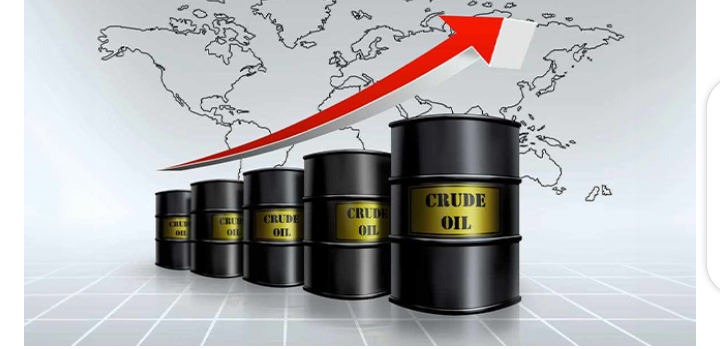
The development rattled financial markets worldwide, sending crude prices soaring by about seven per cent while dampening investor confidence across major stock exchanges.
The latest market reaction followed reports by Iran’s Tasnim news agency that Tehran had decided to halt negotiations with Washington, which were being conducted through international mediators.
The announcement came after a weekend marked by renewed military exchanges between the two countries and growing tensions linked to the wider regional conflict.
Iran reportedly insisted that any future agreement must address Israel’s expanding military operations in Lebanon, a condition that has complicated diplomatic efforts aimed at reducing hostilities in the region.
Market analysts said the suspension of talks significantly weakened hopes of a lasting breakthrough between the two nations.
“Hopes of further progress in US-Iran talks have been dashed,” said Chris Beauchamp, Chief Market Analyst at investment platform IG.
He noted that the collapse of negotiations, combined with recent military confrontations, had sharply increased fears of another round of conflict in one of the world’s most strategic energy-producing regions.
“This has duly resulted in a spike for oil prices, since the combination of this and the weekend’s exchange of fire dramatically raises the chances of a fresh round of conflict,” Beauchamp explained.
The situation has been further complicated by disruptions around the Strait of Hormuz, a crucial maritime route through which nearly one-fifth of global oil and liquefied natural gas supplies are transported.
Following military strikes launched against Iran by the United States and Israel earlier in the year, Tehran effectively restricted movement through the strategic waterway.
Although a ceasefire reached in April helped reduce direct hostilities, commercial traffic through the strait has remained limited.
Analysts warned that continued restrictions could place additional pressure on global energy supplies.
“Markets know that oil stockpiles are being rapidly run down, and the rosy assumptions around the renewal of supplies involved the straits being open by June,” Beauchamp said.
“No such opening is in sight, and each day brings the crunch point closer,” he added.
The surge in crude prices quickly spread through global financial markets, interrupting a strong rally that had been driven largely by enthusiasm surrounding artificial intelligence-related investments.
Wall Street initially appeared poised for gains, but the sharp increase in oil prices pushed major American indices into negative territory shortly after trading opened.
While the Dow Jones Industrial Average slipped lower, the S&P 500 and Nasdaq Composite managed to recover modestly, aided by strong gains in technology stocks.
A key driver of investor optimism was semiconductor giant Nvidia, whose shares climbed more than four per cent following the unveiling of a new artificial intelligence-focused laptop chip in Taiwan.
The company introduced the RTX Spark processor, a product designed specifically for next-generation personal computers capable of running advanced AI applications and digital assistants.
Nvidia’s latest announcement reinforced confidence in the AI sector, helping technology shares outperform broader market trends.
The positive sentiment surrounding artificial intelligence also boosted Asian stock markets.
South Korea emerged as one of the strongest performers, with Seoul’s main stock index rising by more than four per cent.
Technology heavyweight Samsung Electronics gained over nine per cent, while semiconductor manufacturer SK Hynix also posted notable advances.
Independent market analyst Stephen Innes said investors remain highly optimistic about the future growth potential of artificial intelligence technologies.
“Investors continue to embrace the AI boom,” he said.
The enthusiasm has played a major role in driving stock markets to record levels in recent months despite concerns over inflation, geopolitical tensions and slowing economic growth.
However, European markets were unable to escape the impact of rising energy costs.
Major indices across London, Paris and Frankfurt ended the day lower as investors assessed the potential consequences of prolonged instability in the Middle East.
Currency markets also reflected a cautious mood, with the US dollar strengthening against most major global currencies.
Meanwhile, shares in British budget airline EasyJet surged more than nine per cent after the company dismissed reports of a potential takeover attempt by American private equity firm Castlelake.
Castlelake, which owns a minority stake in the airline, disclosed that it was considering a possible bid. EasyJet, however, described the move as opportunistic, helping to fuel investor interest in the company’s stock.
By the close of trading, Brent crude, the international benchmark for oil prices, had climbed 6.6 per cent to $97.15 per barrel, while West Texas Intermediate rose 7.6 per cent to $94.01 per barrel.
Analysts said investors would continue to monitor developments in the Middle East closely, with future movements in oil prices likely to depend on whether diplomatic efforts can be revived and whether tensions between Iran, the United States and Israel escalate further.
For now, markets remain on edge as geopolitical uncertainty continues to shape global economic sentiment.