The Manufacturers Association of Nigeria (MAN) has called for wider stakeholder engagement over the Senate’s proposal to ban the importation of textile materials, warning that policy decisions without consultation may undermine the revival of the sector.
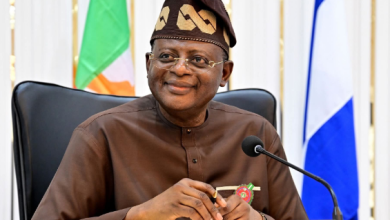
MAN’s Director-General, Segun Ajayi-Kadir, made the appeal on Wednesday during an interview on Channels Television’s The Morning Brief, stressing that Nigeria’s textile industry can meet local demand but requires more than legislative resolutions to recover fully.
He cautioned lawmakers against repeating what he described as past policy failures driven by insufficient consultation with affected stakeholders.
“I want to appeal to the National Assembly: let us not go down this route the same way again.
”The failure of policy in Nigeria has principally been due to a lack of stakeholder engagement. You cannot shave a man’s head in his absence,” he said.
Ajayi-Kadir argued that many well-meaning policies often fail because they are introduced without reflecting the realities on the ground.
“We pass resolutions, introduce policies, and enact laws that do not substantially reflect what is happening on the ground. That is why well-intentioned moves fail to achieve their objectives,” he said.
He insisted that stakeholders in the textile industry must be actively involved in shaping any import restriction policy, adding that government must first understand the constraints facing local manufacturers.
“We need stakeholder engagement. We need to bring all the existing textile industries to the table and ask them, ‘When, how, and where can you scale?’ We have an idea of the national demand, and we know the reasons why they are operating below 30 per cent of installed capacity.
”The question is, does the government have the political will to do what it takes to help them deliver?”
The Senate had earlier urged the Federal Government to impose a total ban on the importation of textile materials as part of efforts to revive domestic production and stimulate job creation, particularly in industrial zones such as the Kaduna–Kano corridor.
Lawmakers argued that reviving the textile sector could help reduce unemployment and address growing insecurity linked to joblessness.
Ajayi-Kadir, however, maintained that reviving the industry requires coordinated implementation of supportive policies rather than bans alone.
“It needs to be actively supported by measures that we have consistently recommended but have not yet been implemented,” he said.
He questioned the consistency of policy enforcement, noting that government institutions must also demonstrate commitment to promoting local production.
“For instance, are we going to enforce the patronage of made-in-Nigeria textiles within the government? When the National Assembly passed this resolution, how many of them were wearing made-in-Nigeria garments?”
He also drew attention to broader industrial challenges, asking whether Nigeria was ready to fully enforce local content policies across sectors.
“If you legislate a ban on textile imports, it must go hand-in-hand with the diligent implementation of Executive Order 003 and a ‘Nigeria First’ mindset,” he said.
Ajayi-Kadir further raised concerns about enforcement capacity, border security, and tariff compliance, warning that without strong implementation mechanisms, import restrictions could fail to achieve their intended impact.
“A major conversation needs to take place for us to be serious about enforcing an import ban. It is not just by fiat,” he added.