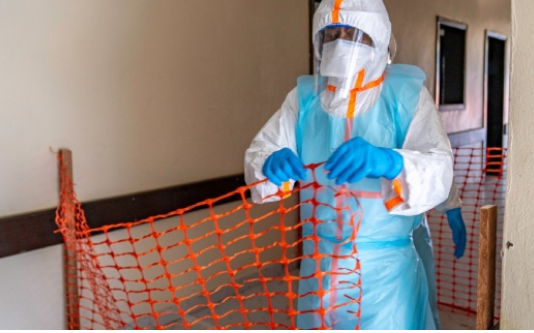
Twelve years after successfully containing one of the most dangerous disease outbreaks in modern history, Nigeria is once again mobilising resources and strengthening its public health systems against a potential Ebola threat.
The renewed vigilance follows fresh outbreaks of the Ebola virus disease in the Democratic Republic of Congo (DRC) and Uganda, prompting the Federal Government to activate emergency preparedness measures aimed at preventing the virus from entering the country.
In response to the growing regional health concern, President Bola Tinubu has approved a nationwide preparedness strategy, established a Presidential Task Force and released emergency funding to boost Nigeria’s readiness against any possible outbreak.
Health authorities warned that increased cross-border movement, international travel and Nigeria’s extensive land borders could elevate the risk of importing the deadly virus into the country if adequate precautions are not maintained.
As part of efforts to strengthen the nation’s capacity to respond rapidly to any emerging threat, President Tinubu approved the immediate release of N10 billion for Ebola preparedness and response activities.
The President also constituted a Presidential Task Force on Ebola Virus Disease Preparedness and Emerging Public Health Threats to oversee national coordination and implementation of preventive measures.
According to the President’s Special Adviser on Information and Strategy, Bayo Onanuga, the intervention fund will enhance the operational effectiveness of the Nigeria Centre for Disease Control and Prevention (NCDC) and support critical emergency response operations nationwide.
The task force would be chaired by the Chief of Staff to the President, Femi Gbajabiamila, and would include representatives from relevant ministries, agencies and state governments.
The decision followed a high-level stakeholders’ meeting convened to evaluate Nigeria’s level of preparedness and identify measures needed to prevent the virus from crossing into the country.
The Federal Government has also unveiled a series of preventive measures targeting airports, border corridors and other entry points into the country.
Among the new initiatives are enhanced temperature checks, improved passenger screening procedures and strengthened crowd-control mechanisms at international airports.
Authorities have also directed closer surveillance of travellers arriving from destinations considered high-risk for Ebola transmission.
Isolation and referral centres are being activated at the international airports in Lagos and Abuja to ensure rapid response in the event of any suspected case.
In addition, travellers arriving from or transiting through designated high-risk countries will be required to complete QR code-based health declaration procedures before entry.
Officials also announced plans for the disinfection of airport terminals, cargo handling facilities and baggage processing areas as part of broader preventive measures.
Consultations are ongoing with aviation regulators, diplomatic representatives and security agencies regarding possible travel-related restrictions involving affected countries if the situation deteriorates.
State governments hosting international airports and major border routes have equally been instructed to submit comprehensive preparedness plans and funding requirements for coordinated implementation.
The Nigeria Centre for Disease Control and Prevention has classified the risk of Ebola entering Nigeria as high, citing developments in neighbouring regions and increasing international mobility.
Speaking during a media briefing in Lagos, the Director-General of the agency, Dr. Jide Idris, said the assessment was informed by active outbreaks in East Africa, growing travel activities and the challenge posed by porous borders.
Although no Ebola case has been recorded in Nigeria, he assured that surveillance systems have been strengthened across the country.
Dr. Idris noted that early detection remains challenging because Ebola symptoms often resemble those associated with diseases such as malaria and Lassa fever.
He therefore urged state governments to activate emergency response mechanisms while encouraging healthcare workers to remain alert and prepared.
“Since confirmation of the outbreak in the region, NCDC has intensified the preparedness activities nationwide to ensure that Nigeria remains ready to rapidly detect, investigate, contain, and respond to any potential outbreak of disease,” he said.
The agency disclosed that it has already activated several emergency response pillars, including risk communication, disease surveillance, case management and stakeholder coordination.
Lessons From Nigeria’s 2014 Success
Public health experts believe Nigeria’s greatest advantage lies in the experience gained during the historic Ebola outbreak of 2014.
That outbreak began when Liberian-American traveller Patrick Sawyer arrived in Lagos carrying the virus, triggering a public health emergency that threatened millions of lives.
The crisis later claimed several victims, including renowned physician Dr. Ameyo Adadevoh, whose courageous actions prevented wider transmission and earned international recognition.
Experts said many of the strategies deployed during that period remain relevant today and should be fully reactivated.
“It’s very important because, in 2014, community engagement really helped. Public health education via radio, one-on-one engagement, community leaders and religious leaders really helped to contain it,” said Dr. Abdullahi Nasiru, a Consultant and Clinical Microbiologist at the Federal Medical Centre, Abuja.
“I think we need to begin to look at those things that gave us that success story in 2014 and bring them back because we have to leverage the existing infrastructure and everything that was done then that was able to help us minimise the fatality rate associated with the disease,” he added.
Ebola remains one of the world’s deadliest infectious diseases, spreading primarily through close physical contact and exposure to infected bodily fluids.
Over the past five decades, outbreaks across Africa have resulted in hundreds of deaths and significant public health emergencies.
Health authorities are particularly concerned about the current outbreak in Central Africa, where hundreds of infections and dozens of fatalities have already been reported in the Democratic Republic of Congo and Uganda.
Reports indicate that the present outbreak is the 17th recorded Ebola epidemic in the DRC, with confirmed cases approaching 500 as health officials battle to contain its spread.
For Nigeria, the challenge is not only preventing the virus from crossing its borders but also ensuring that lessons from previous outbreaks are effectively applied.
The coming weeks are expected to test the country’s preparedness systems, emergency coordination structures and capacity to respond swiftly to one of the most dangerous public health threats known to humanity. :::