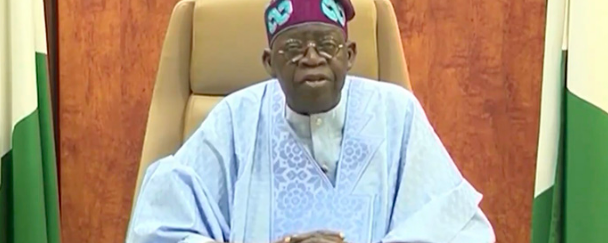
President Bola Tinubu on Thursday used his 2026 Democracy Day address to defend his administration’s economic and security policies, reaffirm his commitment to democratic governance and announce national honours for dozens of individuals who played significant roles in Nigeria’s pro-democracy struggle.
Addressing the nation on the occasion of June 12, Tinubu described the day as a powerful reminder of the sacrifices made by Nigerians in the fight for democratic rule and urged citizens to remain committed to strengthening the country’s democratic institutions.
The President noted that Nigeria had now enjoyed 27 consecutive years of civilian rule, the longest uninterrupted democratic period in the nation’s history.
He stressed that safeguarding democracy requires continuous participation by citizens and strong institutions capable of protecting the will of the people.
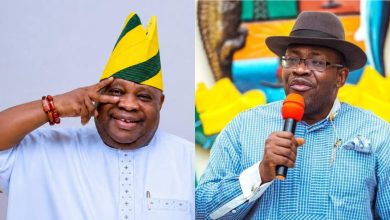
Tinubu specifically called on the Independent National Electoral Commission (INEC), security agencies and political parties to ensure that forthcoming elections in Ekiti and Osun states are conducted peacefully and transparently.
According to him, public confidence in elections remains essential for democratic stability, warning that democracy is weakened whenever citizens lose faith in the electoral process.
The President paid glowing tribute to several icons of the June 12 movement and Nigeria’s democratic journey, including the late Chief M.K.O. Abiola, widely regarded as the winner of the annulled June 12, 1993 presidential election.
He also honoured the memory of Alhaja Kudirat Abiola, Chief Gani Fawehinmi, Chief Bola Ige, Chief Alfred Rewane, Pa Abraham Adesanya and numerous other activists and political leaders who endured persecution and hardship in the struggle to restore democratic governance.
On security, Tinubu acknowledged growing public concerns over recent incidents of insecurity, including the abduction of schoolchildren in Oyo and Borno states.
Despite these challenges, he maintained that his administration was making measurable progress in confronting terrorism, banditry and other criminal activities.
The President disclosed that the federal government had declared a security emergency and approved the recruitment of more than 50,000 police officers alongside thousands of military personnel to strengthen security operations across the country.
He further revealed that N5.41 trillion had been allocated to defence and security in the 2026 budget as part of efforts to equip security agencies and sustain ongoing operations.
According to Tinubu, terror-related fatalities have fallen considerably, while security forces neutralised more than 13,000 terrorists within the last year.
He added that the government’s deradicalisation and rehabilitation programme, Operation Safe Corridor, had recorded significant success, with over 124,000 insurgents and their dependants surrendering since 2023.
Turning to the economy, the President defended the major reforms introduced since he assumed office in 2023, arguing that although the measures were difficult, they were necessary to stabilise the economy and place the country on a path of sustainable growth.
Tinubu said the reforms had strengthened public finances, improved fiscal accountability and restored investor confidence in key sectors of the economy.
He pointed to rising federation revenues and growing investments across agriculture, energy, manufacturing, mining, transportation, technology and the creative industry as evidence that the economy was gradually responding to policy changes.
The President also highlighted improvements in Nigeria’s refining capacity, describing increased domestic refining as a major step towards reducing dependence on imported petroleum products and enhancing national energy security.
On the power sector, Tinubu said his administration had implemented important reforms through the Electricity Act, which gives states greater authority to generate, transmit and distribute electricity within their jurisdictions.
He disclosed that the Presidential Power Sector Task Force had received approval to mobilise N4 trillion to settle verified legacy debts within the electricity value chain and tackle the country’s persistent metering challenges.
According to the President, ongoing investments in infrastructure and agriculture are expected to stimulate economic activity, create employment opportunities, boost exports and improve the living standards of Nigerians.
He added that the government remained committed to reducing inflationary pressures and expanding opportunities for businesses and households across the country.
Tinubu also restated his administration’s support for local government autonomy, describing effective grassroots governance as a critical component of national development, service delivery and community security.
As part of activities marking Democracy Day, the President announced that the completed Institute of Petroleum Studies in Kaduna would be renamed the General Shehu Musa Yar’Adua University of Geological Sciences and Engineering Technology.
He said the decision was taken in honour of the late General Shehu Musa Yar’Adua, whom he described as a distinguished military officer and one of the leading figures in Nigeria’s democratic evolution.
The President also unveiled a list of national honours recipients comprising journalists, lawyers, activists, politicians, academics and military officers who contributed to the struggle for democracy and good governance.
Among those recognised were Ayoka Lawani, Tunde Fagbenle, Oladele Alake, Olatunji Bello, Louis Odion, Segun Babatope, Bola Bolawole, Femi Kusa, Debo Adeniran, Ayo Opadokun, Joe Okei-Odumakin, Richard Akinnola, Niran Malaolu, Ishola Williams, Babajide Kolade-Otitoju and Ike Okonta, among several others.
Tinubu also paid tribute to military officers who aligned themselves with democratic ideals during difficult periods in the nation’s history, including the late General Shehu Musa Yar’Adua and other soldier-democrats.
He urged Nigerians to remain united despite political, ethnic and religious differences, stressing that nation-building requires collective sacrifice and shared responsibility.
According to him, while previous generations fought for independence and democracy, the responsibility of the current generation is to secure economic prosperity and national development for future generations.
Ending his address on a note of resilience and optimism, the President said Nigerians have repeatedly demonstrated strength in the face of adversity.
“June 12 reminds us that Nigerians do not break. We bend, we bleed, but we do not break,” the President said.