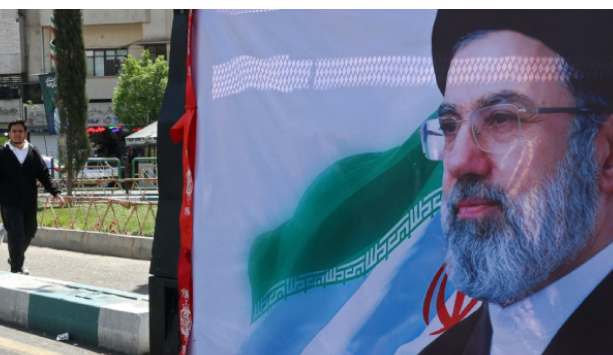
Iran’s Supreme Leader, Ayatollah Mojtaba Khamenei, has revealed that he approved the recent agreement with the United States despite holding reservations about the arrangement.
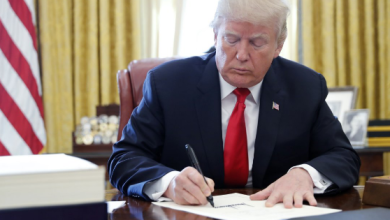
The agreement, signed by U.S. President Donald Trump and Iranian President Masoud Pezeshkian, opens a 60-day window for discussions on broader issues between both countries.
Among the expected topics are Iran’s nuclear programme and other long-standing disputes that have strained relations for decades.
Uncertainty, however, remained over the next phase of the process, including previously announced plans for talks and a formal signing event in Switzerland.
The agreement followed years of hostility between Washington and Tehran, which have lacked diplomatic relations since Iran’s 1979 Islamic Revolution.
Global oil prices dropped shortly after the deal was announced, reflecting market optimism that tensions in the region could ease.
Shipping activity around the Strait of Hormuz remained limited, although the strategic waterway is expected to fully reopen under the terms of the agreement.
Khamenei, who assumed leadership after the death of his father, Ayatollah Ali Khamenei, during the conflict in February, explained his decision in a written statement.
“But I issued my permission due to the commitment” made by Iranian officials to safeguard the interests of the nation, he stated.
The Iranian leader stressed that future direct talks with Washington should not be viewed as acceptance of American positions.
“Face-to-face negotiations” with the U.S. would continue when necessary, but they do not “mean accepting the enemy’s point of view,” he said.
Observers noted that the late Ali Khamenei often allowed negotiations with foreign powers despite expressing caution about them.
Mojtaba Khamenei has largely remained out of public view since becoming supreme leader following the conflict.
Attention is expected to focus on the funeral ceremonies of his late father in July, where analysts will watch closely for signs of his leadership style.
Meanwhile, the United States has lifted its naval blockade of Iranian ports, restoring maritime access to and from the country.
American military officials confirmed that naval forces would remain in the region despite ending the blockade.
Maritime tracking data showed several vessels moving through the Strait of Hormuz after restrictions were eased.
Iranian state media reported that ships seeking passage through the strait must now submit requests to a newly established authority.
Officials also announced that no transit charges would be imposed on vessels during the 60-day period covered by the agreement.
U.S. Vice President JD Vance said technical discussions with Iran could take place in Switzerland later this weekend.
However, Iranian media reported that no final confirmation had been issued regarding the country’s participation in those talks.
The agreement is expected to help end the U.S.-Israeli conflict with Iran, which lasted for five weeks before a ceasefire was achieved in April.
Despite the breakthrough, many citizens remain uncertain about the prospects for lasting peace.
“I have no hope that this is a lasting agreement. Maybe after the 60 days they start fighting again,” said Mina, a 54-year-old psychologist in Tehran.
French President Emmanuel Macron also expressed caution over the situation.
According to Macron, he does not believe the conflict has been completely resolved despite the signing of the agreement.
The deal commits Washington to immediately remove sanctions that have severely affected Iran’s oil sector and wider economy.
It also outlines plans for a $300 billion reconstruction fund to be released once a final nuclear agreement is achieved.
The proposed fund would receive support from regional partners and help rebuild areas damaged during the conflict.
Trump’s decision to pursue the agreement has drawn criticism from some political allies in the United States.
Republican Senator Bill Cassidy described the move as the “worst foreign policy blunder in decades.”
“Iran’s nuclear ambitions were not curbed, and they have learned that threatening the Strait of Hormuz works,” Cassidy argued.
Trump defended the agreement and warned that the US would respond forcefully if Iran violated its commitments.
The American president also dismissed critics, describing them as “fools” while celebrating the agreement as a “Victory.”
Within Iran, some hardliners have also questioned the deal, arguing that it offers too many concessions.
However, Parliament Speaker Mohammad Bagher Ghalibaf maintained that the agreement reflected a diplomatic setback for Washington.
President Pezeshkian, on the other hand, described the development as a “historic” achievement.
Agnes Lavallois, head of France’s Institute for Research and Studies on the Mediterranean and the Middle East, suggested that reopening the Strait of Hormuz was a key American objective.
She said many observers believed the United States “wanted just one thing — the reopening of the Strait of Hormuz.”