A renewed exchange of military strikes between the United States and Iran has further strained an already fragile ceasefire arrangement in the Middle East, raising fears over escalating instability in one of the world’s most strategic maritime corridors.
Iranian forces reportedly launched attacks on U.S.-linked sites in the Gulf region in retaliation for earlier American strikes, according to state media.
The escalation comes amid mutual accusations over violations of the ceasefire that had been aimed at halting a war that began on February 28 following US and Israeli strikes on Iran.
The latest developments were confirmed by U.S. Central Command (United States Central Command), which said its forces conducted strikes on Iranian missile and drone storage facilities as well as coastal radar installations in response to what it described as “unwarranted aggression” against commercial shipping in the Strait of Hormuz.
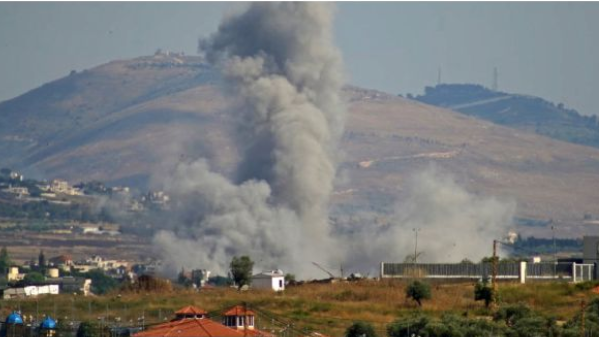
Iranian state television reported explosions in the southern port city of Sirik, stating that a projectile impact was responsible for damage near a pier area.
However, authorities maintained that port operations remained unaffected and denied any major disruption to facilities.
The exchange has intensified concerns over security in the Strait of Hormuz, a critical chokepoint through which a significant portion of global oil shipments pass.
Analysts warned that continued hostilities could threaten global energy flows and further destabilize markets already sensitive to geopolitical shocks.
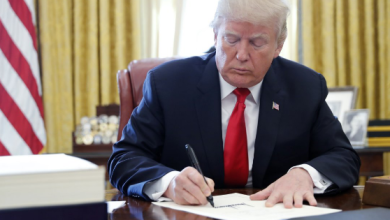
U.S. President Donald Trump described the reported Iranian drone activity as a “foolish violation” of ceasefire terms, while Vice President JD Vance warned that further attacks would be met with force, underscoring Washington’s hardened posture.
In response, Iran’s Islamic Revolutionary Guard Corps said it had targeted U.S. positions in the Gulf and warned that any repeat of aggression would trigger a broader response.
Tehran also maintained restrictions on maritime movement through the Strait, though commercial vessels have continued to transit the waterway under adjusted routing.
Despite the military escalation, oil markets showed relative resilience, with prices easing on expectations that shipping activity through Hormuz may gradually stabilise.
The conflict also intersects with parallel diplomatic efforts in the region. A separate U.S.-backed framework involving Israel and Lebanon has been presented as a step toward broader de-escalation, though regional actors remain divided on its implications.
Meanwhile, the International Atomic Energy Agency (International Atomic Energy Agency) warned that any long-term US-Iran settlement would require strict verification mechanisms to prevent nuclear weapon development, highlighting another unresolved dimension of the crisis.
As exchanges of fire continued, observers said the ceasefire’s durability now hinges on whether diplomatic channels can outpace military retaliation in a rapidly tightening conflict cycle.