The World Bank Group on Wednesday approved a new seven-year partnership framework for Nigeria alongside a $1.25 billion financing package aimed at boosting investment, creating jobs, and sustaining ongoing economic reforms.
The new Country Partnership Framework (CPF), covering 2026 to 2032, is designed to convert recent macroeconomic gains into broad-based development by removing structural barriers that have long hindered private sector growth and employment.
Alongside the framework, the bank also approved the Nigeria Actions for Investment and Jobs Acceleration (NAIJA) Development Policy Financing programme to strengthen competitiveness, attract investment, and support inclusive economic expansion.
According to the World Bank, Nigeria has recently recorded improvements in economic growth, revenue generation, foreign reserves, and investor confidence. However, it stressed that job creation remains the country’s most urgent development challenge.
The programme targets major development outcomes, including expanding electricity access to 32 million people, connecting 58 million Nigerians to broadband, improving health and nutrition services for 40 million citizens, and supporting 9.5 million farmers to boost agricultural productivity.
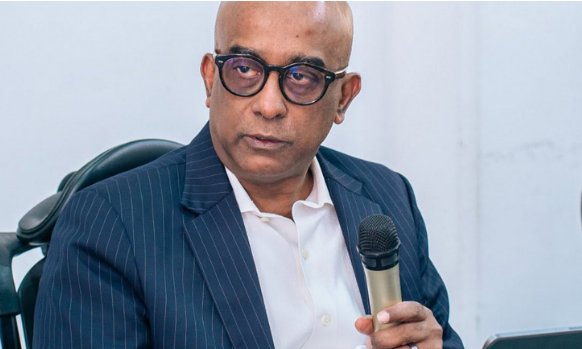
World Bank Country Director for Nigeria, Mathew Verghis, said the new strategy places job creation at the centre of its support, noting that economic stability must translate into better living standards through private sector-led growth.
He explained that while macroeconomic reforms have improved stability, deeper structural reforms are needed to unlock investment and expand employment opportunities across the country.
The financing package also supports reforms in capital markets, digital economy regulation, electricity sector reform, agricultural productivity, and domestic revenue mobilisation.
It further included measures to reduce trade barriers in line with ECOWAS and AfCFTA commitments.
The International Finance Corporation (IFC) said Nigeria’s long-term growth depends on stronger investment inflows and improved productivity, while the Multilateral Investment Guarantee Agency (MIGA) noted it would expand risk guarantees to encourage private capital in infrastructure and financial services.
The federal government, meanwhile, pledged stronger collaboration with the World Bank to expand irrigation systems and improve water access to enhance food security and rural development.
Minister of Water Resources and Sanitation, Joseph Utsev, said the partnership would support the Sustainable Power and Irrigation for Nigeria (SPIN) project and boost year-round farming through improved irrigation infrastructure.
He added that better water management is essential for increasing agricultural output, reducing poverty, and supporting national economic growth.
World Bank officials said the upcoming Africa Water Forum in N’Djamena, Chad, would also provide a platform to explore innovative financing solutions for water security and sanitation across the continent.