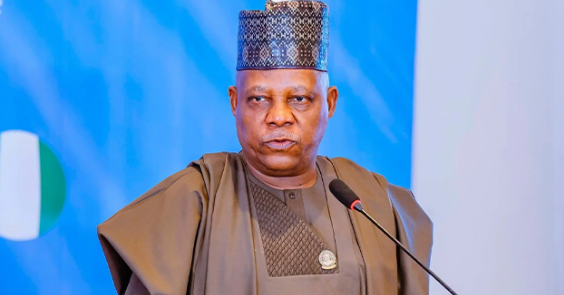
Vice President Kashim Shettima has launched a $500 million Niger Delta Agricultural Investment Fund aimed at transforming the region’s agricultural sector and unlocking new economic opportunities.
Shettima unveiled the fund on Wednesday in Abuja at the Niger Delta Agricultural Development and Investment Summit, organised by his office in collaboration with the Niger Delta Development Commission (NDDC).
Describing agriculture as the foundation of national survival and stability, the vice president said Nigeria must reclaim its position as a food-producing nation and reduce dependence on imports.
He noted that before the discovery of oil, agricultural activities such as groundnut production in the North, cocoa farming in the West, and palm produce in the East and Niger Delta played major roles in financing the country’s early development.
According to him, the oil boom created a dependence that weakened the country’s agricultural drive, but the new initiative was designed to restore productivity and attract investment into the sector.
Shettima said the fund would operate as a commercial, returns-driven investment vehicle covering key agricultural value chains, including aquaculture, palm oil, cassava, cocoa, rice, horticulture, marine resources, and livestock.
He added that the initiative would be supported by commitments from international development institutions, including the World Bank, African Development Bank, Islamic Development Bank, European Bank for Reconstruction and Development, as well as private investors.
The vice president said the fund would be coordinated by the Niger Delta Agricultural Development and Investment Council, with the NDDC serving as its secretariat.
Shettima linked the initiative to President Bola Tinubu’s food security agenda, noting that the administration had introduced programmes focused on mechanisation, increased production, and improved access to markets.
He urged investors, development partners, and state governments to see the summit as the beginning of a long-term commitment rather than a one-day event.
Minister of Regional Development, Abubakar Momoh, said agriculture remained central to the government’s economic transformation plans because of its potential to create jobs and improve livelihoods, especially for youths and women in the Niger Delta.
NDDC Managing Director, Samuel Ogbuku, described the summit as the beginning of a lasting partnership to harness the agricultural potential of the region, while NDDC Board Chairman, Chiedu Ebie, said the Niger Delta must move beyond untapped resources to sustainable productivity and shared prosperity.