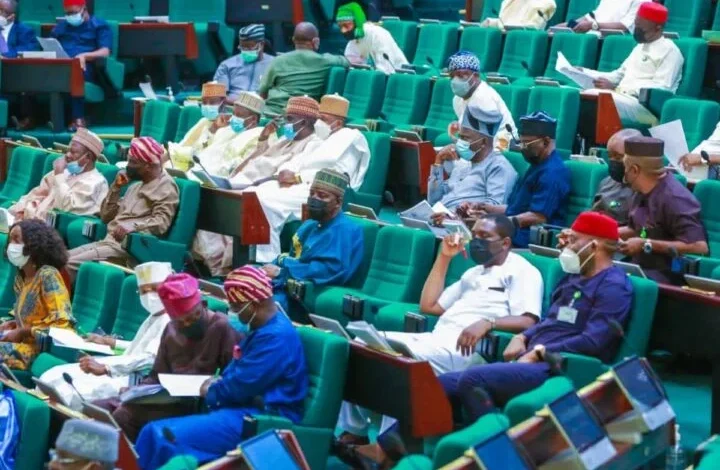
The House of Representatives has passed a constitutional amendment bill seeking the establishment of state police, with 311 lawmakers voting in favour of the proposal.
The approval, reached during Thursday’s plenary, met the required two-thirds majority needed for constitutional alteration and moves Nigeria closer to adopting a dual policing structure involving both federal and state police services.
The passage, however, was followed by controversy as members of the minority caucus staged a walkout, accusing the leadership of failing to follow due process in the consideration of the bill.
The Deputy Speaker of the House and Chairman of the Committee on Constitution Review, Benjamin Kalu, presented the committee’s report and urged lawmakers to support the proposed amendment before electronic and virtual voting commenced.
While the majority of lawmakers backed the bill, opposition members led by Minority Leader Fred Agbedi rejected the process adopted during the consideration and left the chamber in protest.
The minority caucus later explained that it supported the idea of state police but raised concerns over what it described as violations of the Constitution and the Standing Orders of the House.
Defending the process, Chairman of the House Committee on Defence, Babajimi Benson, said the legislative procedure followed by the House was appropriate.
The bill, which had earlier received approval from the Senate, now advances through the constitutional amendment process following passage by both chambers of the National Assembly.
If eventually assented to, the legislation will create a framework for the establishment of state police alongside the existing Federal Police Service.
Under the proposed arrangement, state governors would have the power to appoint commissioners of police for their respective states, subject to confirmation by state Houses of Assembly.
The bill also outlines the relationship between governors and state police authorities, allowing governors to issue written policy directives on public safety and order.
To prevent possible misuse of state police structures, lawmakers included safeguards protecting citizens’ rights and political freedoms.
A provision in the bill stated that a state Commissioner of Police “shall not arrest, detain, investigate or deploy force against any person, political party or group merely for criticising the government except in accordance with the law.”
The measure is aimed at preventing state police from being used to intimidate political opponents, journalists, activists or other dissenting voices.
President Bola Tinubu had earlier forwarded the proposal to the National Assembly as part of efforts to reform Nigeria’s security system and improve internal security management.
The President said the amendment would provide a legal foundation for states to establish their own police services, strengthen grassroots intelligence gathering and improve responses to security threats.
Meanwhile, the House also passed a bill seeking the establishment of the Federal College of Fisheries Technology and Marine Engineering in Rivers State before adjourning plenary until September 15, 2026.