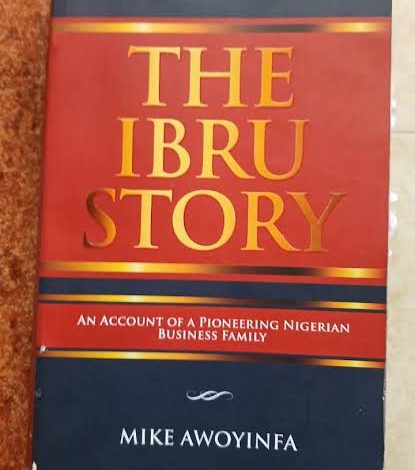
Renowned scholar and literary critic, Professor Godini G. Darah, has described The Ibru Story, written by veteran journalist Mike Awoyinfa, as one of the most inspiring books to emerge from Africa in the 21st century, saying it challenges long-standing negative narratives about the continent and celebrates indigenous entrepreneurship.
Speaking at the public presentation of the 342-page biography at the MUSON Centre, Lagos, Darah said the book offers a compelling account of how the Ibru family built one of Africa’s largest indigenous business empires despite numerous challenges.
According to him, the publication comes at a time when Africa is often portrayed in global media through the lenses of conflict, poverty and instability.
He argued that such portrayals ignore the continent’s achievements and its immense contributions to global prosperity.
“The publication of the book, The Ibru Story, is one of the most positive and inspiring news from Africa in the 21st century,” Darah said.
He noted that Awoyinfa’s work presents a refreshing counter-narrative by documenting the rise of the Ibru family from humble beginnings to becoming pioneers of indigenous enterprise across several sectors of the Nigerian economy.
The literary scholar described the book as “a classical epic narrative” that chronicles determination, innovation, resilience and philanthropy, while providing practical lessons for entrepreneurs, students, policymakers and future generations.
Darah said the biography traces the origins of the Ibru family in Agbarha-Otor, Delta State, highlighting the visionary leadership of the late Olorogun Michael Ibru, who transformed frozen fish from an unpopular commodity into a staple in Nigerian homes before expanding into shipping, hospitality, banking, agriculture, aviation, oil and gas, among other industries.
Quoting economic historian Tom Forrest, Darah noted that the Ibru Organisation became one of Africa’s biggest conglomerates, employing between 9,000 and 11,000 workers by 1990 before growing into a multi-billion-dollar enterprise recognised by Forbes among Africa’s leading family businesses.
Beyond business success, Darah said the book explores the family’s contributions to politics, public service, philanthropy and national development, documenting the roles played by members of the dynasty, including the late former Delta State Governor, Chief Felix Ibru, businessman Goodie Ibru, publisher Alex Ibru and other members of the family.
He praised Awoyinfa for presenting balanced accounts of the family’s achievements and difficult moments, including political setbacks, business challenges, military-era persecution and family disputes.
The reviewer also commended the extensive research behind the book, noting that it draws from interviews and testimonies by prominent personalities, including former President Olusegun Obasanjo, former President Goodluck Jonathan, Aliko Dangote, Segun Osoba, Subomi Balogun, Dr. Alex Ekwueme and several members of the Ibru family.
Darah further highlighted the book’s emphasis on family values, discipline, integrity, hard work and charity, saying these principles were central to the success of the Ibru dynasty and remain relevant to Nigeria’s economic development.
He particularly applauded the sections devoted to the women of the Ibru family, saying they reveal the significant but often overlooked roles played by wives, sisters and daughters in building the family’s legacy.
According to him, the concluding chapters, which focus on the second generation of the Ibru family, demonstrate the importance of continuity in preserving both family values and business institutions.
Darah expressed confidence that The Ibru Story would stand as an enduring reference for scholars, entrepreneurs and anyone interested in understanding the evolution of indigenous Nigerian enterprise.
He concluded that the book is not merely the story of one family but a celebration of African excellence, resilience and the possibilities that emerge when vision, discipline and enterprise are sustained across generations.