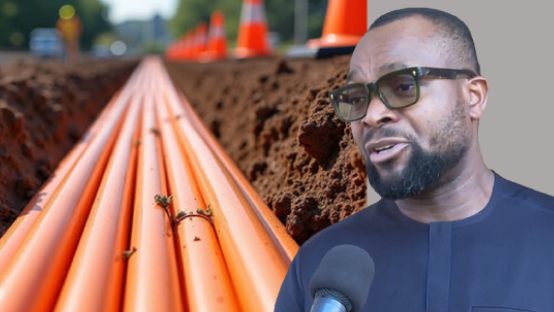
Nigeria is set for a major digital transformation as the Federal Government prepares to begin the deployment of a 90,000-kilometre fibre optic cable network that will connect communities across the country.
The Minister of Communication, Innovation and Digital Economy, Bosun Tijani, disclosed this on Wednesday, after briefing President Bola Tinubu at the Presidential Villa on key technology projects being undertaken by the administration.
Tijani said preparations for the massive infrastructure project had been completed, with resources mobilised and contractual processes concluded ahead of the physical rollout.
“We’re now at the point where, in a few weeks’ time, we should start to lay those fibre, so people will start seeing us around the country deploying the fibre.
”This is going to transform Nigeria for good,” the minister said.
According to the minister, the fibre optic network will spread across all 36 states, the six geopolitical zones, local government areas and wards, creating a stronger foundation for faster and more reliable internet services.
“This is a project where every state, every geopolitical zone, every local government and every ward in this country will be covered with fibre optic cables, which will transform the quality of connectivity,” he said.
He said the project, approved by President Tinubu, is expected to provide better connectivity for more than 20 million Nigerians who currently lack reliable access to mobile networks.
“Before the end of the year, we’ll also start to deploy close to 3,700 towers. It’s taken a lot putting this project together, raising the capital for it, but we are at a point where we should now start deploying around October,” he stated.
The minister also revealed that Nigeria will introduce a new alphanumeric postcode system on October 1, designed to provide a unique digital address for every property in the country.
Tijani described the system as a major improvement that would transform logistics, e-commerce, emergency response and public service delivery.
“It allows us to have unique addresses for every property. That will change the game significantly for Nigeria in terms of the delivery of public services,” he said.
He attributed recent progress in the telecommunications sector to reforms introduced by the Tinubu administration, including recognising digital infrastructure as critical national infrastructure, adjusting telecom tariffs and harmonising taxes affecting the industry.
The government said the combined projects are aimed at building a more connected Nigeria where reliable digital access reaches communities nationwide.
The government believes the project will expand digital access, support businesses, improve online services and strengthen Nigeria’s position in the global digital economy.
Beyond fibre deployment, Tijani announced plans to install about 3,700 telecommunications towers from October to address poor network coverage in underserved communities.