Israeli Prime Minister Benjamin Netanyahu has rejected a U.S.-backed plan for ending the Gaza conflict, openly challenging President Donald Trump and exposing fresh tensions between the two leaders.
Netanyahu made his position clear on Sunday after weeks of growing resistance to the proposal, which Hamas had accepted in late July.
“Israel rejects the 15-point document,” Netanyahu told his cabinet, referring to the framework negotiated with U.S. involvement.
He insisted that Israel would not withdraw its forces simply because an agreement had been reached.
“The Israeli military will not carry out any withdrawal until Hamas is genuinely disarmed, and will continue to thwart threats against our forces and our citizens,” he said.
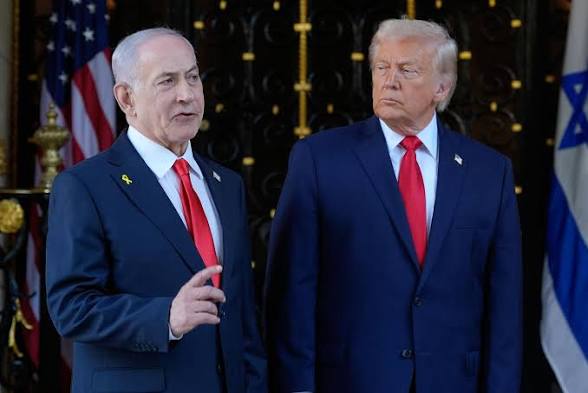
The rejection marks a notable shift in the relationship between Netanyahu and Trump, who has strongly backed Israel and presented the Gaza agreement as an important step towards peace.
Netanyahu still described Trump as “our greatest friend in the White House”, but made clear that friendship would not prevent Israel from opposing parts of the U.S. proposal.
“They have ideas; some of them are acceptable to us and some are not, and we know how to stand our ground on these matters,” Netanyahu said.
The Israeli leader’s stance comes as he faces mounting political pressure at home ahead of the October 27 elections.
Opinion polls have shown Netanyahu either level with or behind his rivals in some surveys, while the Gaza proposal has faced strong opposition from his right-wing political base.
Far-right members of his coalition have also pressured him to reject the deal.
Hamas has maintained its support for the U.S.-backed roadmap and called on Washington to pressure Netanyahu into accepting it.
“We expect the mediators and the American guarantor to pressure Netanyahu and his government to adhere to the roadmap, and not obstruct the process for internal political and electoral reasons,” Bassem Naim, a member of Hamas’s political bureau, told AFP.
Under the proposal, Hamas would surrender its weapons to an emerging Palestinian governing authority, while Israeli forces would gradually withdraw from Gaza as disarmament progressed.
Israel has rejected that sequence, insisting that Hamas must first be completely disarmed.
After meeting Netanyahu last week, the U.S.-backed body overseeing implementation, known as the Board of Peace, appeared to modify its position, saying Israeli withdrawal would only follow “complete” disarmament.
Netanyahu nevertheless remained unconvinced.
“We are talking about real disarmament, not fictitious disarmament,” he said.
Egypt, one of the key mediators, has urged all parties to honour their commitments and avoid actions that could derail the negotiations.
Despite Netanyahu’s rejection of the plan, Israeli military activity in Gaza appears to have decreased since the agreement was announced, although operations have not stopped entirely.
Israeli gunfire on Sunday reportedly injured a child in Khan Yunis, according to Gaza civil defence spokesman Mahmoud Bassal.
Gaza’s health ministry, which operates under Hamas authority, says Israeli military operations have killed 1,258 Palestinians since the ceasefire.
The United Nations has generally regarded the ministry’s casualty figures as reliable.
The Israeli military, meanwhile, has reported five deaths among its forces during the same period.
The dispute over Gaza comes against the backdrop of wider disagreements between Netanyahu and Trump over regional security.
Netanyahu told his cabinet that Israel would prevent Iran from obtaining nuclear weapons regardless of whether an agreement was reached.
“With an agreement or without an agreement, as long as I am prime minister, Iran will not have nuclear weapons,” he said.
The Israeli leader has also ordered fresh strikes on Lebanon following what Israel described as a ceasefire violation by Iran-backed Hezbollah, even as U.S.-mediated talks between Israel and Lebanon continue.
For Trump, Netanyahu’s rejection presents a new challenge to a diplomatic effort he has promoted as a major breakthrough.
For Netanyahu, however, the message is clear: no Gaza agreement will come at the expense of Israel’s demand for Hamas to be fully disarmed.