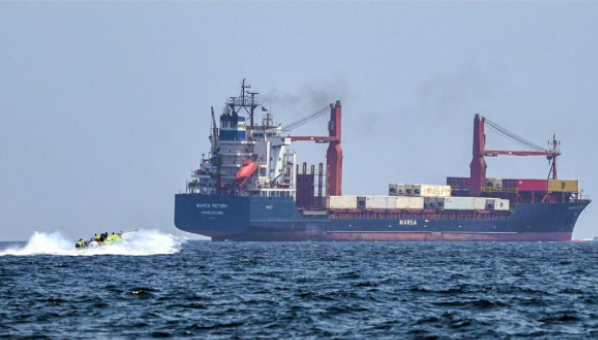
Tehran has issued a fresh warning that it could shut the Strait of Hormuz again if the United States maintains its ongoing naval blockade of Iranian ports.
The threat came just hours after Iranian authorities announced the reopening of the crucial maritime route following a temporary ceasefire linked to tensions in Lebanon.
The Strait of Hormuz remained one of the world’s most strategic waterways, handling a significant share of global oil and gas shipments.
Any disruption to its operations carries immediate consequences for international trade and energy markets.
News of the strait’s reopening earlier had boosted global financial markets, with investors reacting positively to signs of de-escalation.
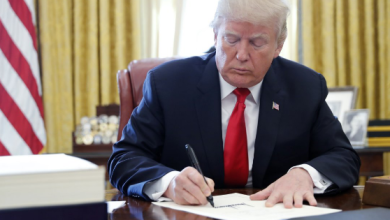
In Washington, optimism also grew, as President Donald Trump suggested that a broader agreement between the U.S. and Iran was nearing completion.
Speaking at an event in Arizona, Trump indicated that negotiations were progressing rapidly and claimed Tehran had agreed to relinquish its stockpile of enriched uranium—long considered a major obstacle in talks.
However, Iranian officials quickly rejected that assertion, insisting that their nuclear materials would remain under their control and were not part of any concession.
Iranian leaders warned that continued interference with vessels linked to their ports could trigger another shutdown of the Strait of Hormuz.
Parliamentary Speaker Mohammad Bagher Ghalibaf stated that the waterway’s accessibility would depend on Iran’s authorisation if the blockade persists.
Foreign ministry spokesman Esmaeil Baqaei also condemned the U.S. naval actions, describing them as a violation of the temporary ceasefire agreement intended to facilitate diplomatic negotiations.
According to the U.S. Central Command, American forces have already redirected at least 21 vessels since the blockade began earlier in the week.
The operations have been accompanied by increased naval patrols in the Arabian Sea, including the deployment of guided-missile destroyers.
Despite rising tensions, President Trump described the day’s developments as positive, praising mediation efforts by Pakistan and support from Gulf allies.
Pakistan, which hosted recent face-to-face talks between U.S. and Iranian officials in Islamabad, has urged both sides to capitalise on the current momentum and finalise a peace agreement.
Trump reiterated in a phone interview that negotiations were close to success, claiming there were no significant obstacles remaining.
He also hinted at the possibility of traveling to Pakistan to formalise any agreement reached.
Still, uncertainty lingers. The U.S. president confirmed that the naval blockade would remain in place if talks collapse, though he left open the option of extending the current ceasefire beyond its scheduled expiration.
The tentative progress has already influenced global oil prices, which have declined amid expectations of a diplomatic resolution.
Additional U.S. measures allowing certain Russian oil shipments to proceed have further increased supply, contributing to the downward trend.
Meanwhile, the 10-day ceasefire in Lebanon has offered some relief to civilians.
Displaced families have begun returning to their homes in southern Beirut and other conflict-affected areas.
Residents expressed cautious optimism, hoping the pause in hostilities would evolve into a lasting peace.
Despite the ceasefire, underlying tensions remain.
The conflict in Lebanon, which escalated earlier in March, involved exchanges between Israeli forces and Hezbollah fighters, further complicating regional dynamics.
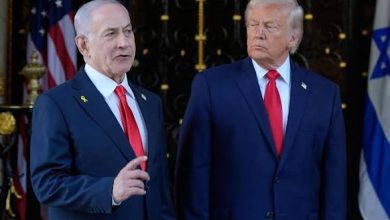
Israeli Prime Minister Benjamin Netanyahu emphasised that military objectives had not yet been achieved, particularly the dismantling of Hezbollah’s capabilities.
On the other hand, Hezbollah signaled readiness to respond to any perceived violations.
As diplomatic efforts continue, the situation around the Strait of Hormuz and the broader Middle East remains delicate, with the risk of renewed escalation still present.