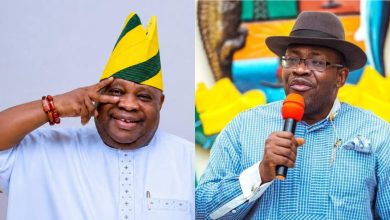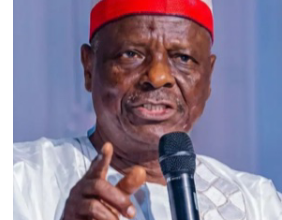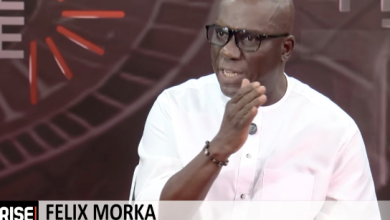
Opposition leaders across Nigeria have agreed to present a common front ahead of the 2027 general elections, resolving to field a single presidential candidate to challenge President Bola Tinubu of the ruling All Progressives Congress (APC).
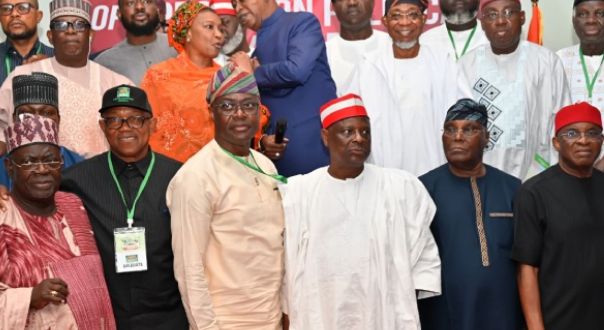
The decision emerged as a key outcome of a National Summit of Opposition Political Leaders held on Saturday in Ibadan, Oyo State.
The gathering brought together prominent figures from various political parties to deliberate on Nigeria’s political trajectory and chart a path forward.
Participants at the summit said the move to adopt a unified candidate was informed by the need to prevent a split in opposition votes and improve their electoral prospects.
They also warned that Nigeria’s democracy is facing mounting pressure, calling for urgent and coordinated action to protect it.
The event, themed “Safeguarding Nigeria’s Democracy: A National Dialogue,” concluded with the adoption of a joint communiqué known as the Ibadan Declaration.
The leaders emphasised that unity among opposition groups would be critical in strengthening democratic competition.
Governor Seyi Makinde, who hosted the summit, cautioned against what he described as a gradual erosion of democratic values.
He argued that the dominance of a single political party risks undermining pluralism and weakening the democratic system.
Reflecting on past political developments in Ibadan, Makinde warned against a return to the “wet e” era, stressing the importance of preserving healthy political rivalry.
“Democracy without opposition is not democracy; it is a slow drift toward a one-party state,” he said.
Factional National Chairman of the Peoples Democratic Party (PDP), Taminu Turaki, described the coalition effort as both strategic and necessary.
He noted that internal divisions have historically weakened opposition movements.
“A single stick can be broken easily, but a bundle of sticks is far more difficult to break,” Turaki said, urging political leaders to place national interest above personal ambition.
Turaki also described the current state of the nation as “progressive regression,” citing worsening insecurity, economic hardship, and declining public confidence in democratic institutions.
“This is not a moment for silence or division; it is a moment for decisive action,” he added.
Former Senate President David Mark also framed the coalition as a “national rescue mission,” insisting that no single opposition party can effectively challenge the existing political structure on its own.
“We cannot confront the future as fragmented entities. This is the time to rewrite the story of coalition building in Nigeria,” Mark said.
In the communiqué issued at the end of the summit, opposition parties reaffirmed their commitment to contest elections at all levels in 2027.
They rejected what they described as attempts to steer the country toward a one-party system and vowed to ensure that Nigerians are presented with credible alternatives.
The declaration also raised concerns about the credibility of the electoral process.
The opposition leaders passed a vote of no confidence in the Chairman of the Independent National Electoral Commission (INEC), Joash Amupitan, accusing him of bias and calling for his removal ahead of the 2027 polls.
In addition, the summit urged the National Assembly to review contentious provisions of the Electoral Act 2026 and called for an extension of deadlines for party primaries until the end of July 2026.
Participants also demanded the release of political actors allegedly detained for bailable offences, emphasising the need to uphold fundamental rights and ensure inclusivity in the democratic process.
Speakers consistently highlighted that Nigeria stands at a critical crossroads, urging decisive leadership to safeguard democratic institutions and restore public trust.
Among those present at the Ibadan meeting were former Vice President Atiku Abubakar, Labour Party’s 2023 presidential candidate Peter Obi, former Kano State governor Rabiu Kwankwaso, former Osun State governor Rauf Aregbesola, former Rivers State governor Rotimi Amaechi, political economist Pat Utomi, and elder statesman Jerry Gana, among others.
The summit ended with a shared commitment by opposition leaders to deepen collaboration, rebuild public confidence, and mount a united challenge in the 2027 presidential election.