The Trade Union Congress has proposed a production subsidy arrangement for the Dangote Refinery and other modular refineries as part of measures aimed at reducing the rising cost of premium motor spirit (PMS), also known as petrol.
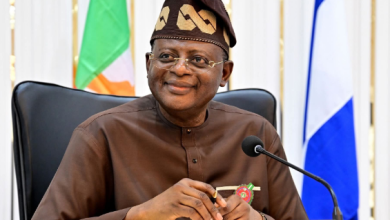
President of the TUC, Festus Osifo, made the proposal on Friday while speaking on Politics Today aired on Channels Television.
Osifo said that although the Federal Government had ruled out the return of fuel subsidy, there was still a need for authorities to introduce measures that would ease the burden of rising petrol prices on Nigerians.
According to him, the country is currently earning more revenue from crude oil sales than initially projected in the national budget.
“So for us as a country, we are making a lot of money. In excess of what we budgeted.
”All right, so today we make at least 35 dollars or so per barrel beyond what we budgeted,” he said.
The labour leader explained that the union was advocating a subsidy targeted at refining operations rather than direct consumption.
“So, what we proposed, knowing and understanding that they wouldn’t want to bring consumption subsidy, we were advocating for a production subsidy,” Osifo stated.
He said part of the additional earnings from crude oil sales could be used to subsidise crude supplied to local refineries, including Dangote Refinery and modular plants, to enable them refine and sell petrol at lower prices.
“Why don’t you take half of it, for example, and use it to subsidise the crude that you are giving to Dangote Refinery and the modular refineries so that they will be able to produce cheaper PMS?” he asked.
Petrol prices have witnessed sharp increases in recent months following tensions linked to the conflict involving the United States, Israel and Iran.
In several parts of the country, PMS prices reportedly climbed from about N800 per litre to nearly N1,300 per litre.
Despite growing calls for the restoration of fuel subsidy, the administration of President Bola Ahmed Tinubu has maintained that the policy will not be reintroduced.
Chairman of the Presidential Fiscal Policy and Tax Reforms Committee, Taiwo Oyedele, recently reiterated the government’s position, insisting that subsidy payments distort the economy and discourage market-driven reforms.
“We will not bring back fuel subsidy because it creates distortions for the economy, and we won’t introduce price control because we believe in the market,” Oyedele said.
He added that global developments in the energy market presented opportunities for Nigeria to attract fresh investments and diversify energy supply sources.
Osifo, however, urged the government to adopt creative solutions capable of cushioning the economic hardship currently faced by citizens.