The Central Bank of Nigeria has released the fourth edition of its Foreign Exchange Manual, introducing updated rules aimed at modernising FX administration and improving transparency in the market.
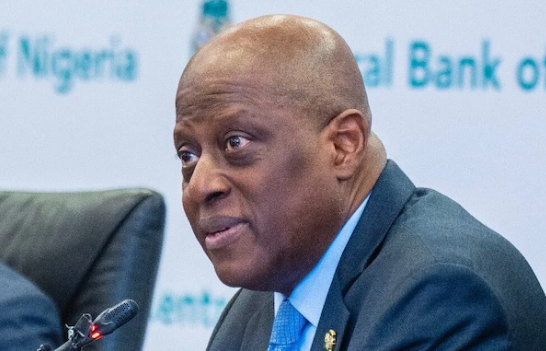
The launch, held in Abuja on Friday, was led by the CBN Governor, Olayemi Cardoso, who said the revised framework reflected ongoing reforms designed to align Nigeria’s foreign exchange system with current global financial realities, domestic economic shifts, inflation trends, and efforts to diversify FX earnings.
Cardoso announced that the updated manual would take effect from June 1, 2026, warning market participants that compliance is expected ahead of the official commencement date.
He cautioned against any attempts to exploit the transition period, stressing that the central bank would intensify monitoring and enforcement to ensure discipline across the market.
According to him, foreign exchange remains a key pillar of any open economy, influencing price stability, capital flows, and investor confidence.
He said the new edition is the result of extensive consultations and technical review aimed at improving clarity, consistency, and efficiency in FX operations.
The CBN governor added that the document is intended not only to strengthen regulation but also to support a more predictable and credible market environment capable of attracting sustainable investment inflows.
Cardoso further noted that the manual would be made available free of charge to authorised dealers, describing the decision as part of efforts to prioritise compliance and accessibility.
He also stressed that successful implementation would depend on cooperation across all market participants, including banks, regulators, corporates, importers, exporters, and government agencies.
“The successful implementation of this Manual depends on the commitment of all stakeholders,” he said, adding that collaboration remains central to maintaining stability in the FX market.
Cardoso emphasised that foreign exchange reserves are buffers rather than direct market funding tools, while reiterating that the long-term goal is to build a deeper and more liquid FX market.
He disclosed that average daily turnover in the FX market has improved significantly under ongoing reforms, rising from about $100 million previously to between $400 million and $600 million, with occasional peaks reaching $1 billion.
Also speaking, Deputy Governor, Economic Policy Directorate, Muhammad Abdullahi, said the revised manual was part of broader reforms aimed at restoring confidence, reducing inefficiencies, and strengthening a rules-based FX system.
He explained that the review involved extensive consultation with banks, regulators, exporters, corporates, and development partners, and is designed to improve price discovery, attract inflows, and support macroeconomic stability.
Abdullahi added that the long-term objective was to build a more resilient FX market capable of sustaining higher transaction volumes and withstanding external shocks.
The revised manual also introduced several operational updates, including changes to import payment thresholds, digital disbursement of travel allowances, improved reporting requirements, and streamlined access to domiciliary accounts.
Other provisions cover non-resident accounts, service export documentation, and foreign currency payments for tuition and professional services, all aimed at improving efficiency and compliance in FX transactions.