The Nigeria Labour Congress (NLC) has issued a strong critique of Nigeria’s worsening security situation and deepening economic hardship, warning that the working class and the majority of poor citizens are currently “bleeding” under the weight of government policies and national insecurity.
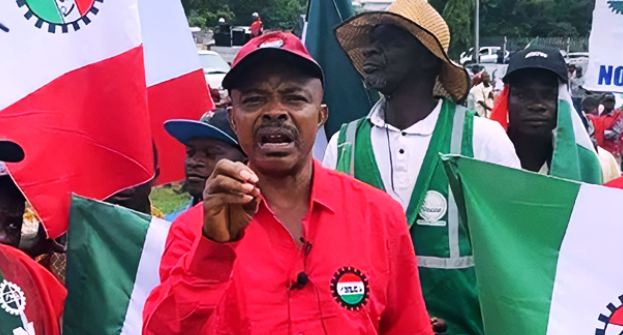
The statement was contained in an Eid-el-Kabir message released on Wednesday and signed by the NLC President, Joe Ajaero, ahead of the Sallah celebrations.
In the message, the labour union described the current economic realities facing Nigerians as severe, arguing that ongoing policy reforms have intensified poverty levels rather than easing them.
It stated that millions of citizens are struggling under what it described as “neoliberal policies” that have placed heavy pressure on household incomes across the country.
The NLC said Nigerian workers and low-income earners are experiencing increasing difficulty meeting basic needs, pointing to rising costs of living, transportation, food, and general inflation as evidence of worsening conditions.
It argued that recent economic reforms particularly the removal of petrol subsidies and the liberalisation of foreign exchange have contributed significantly to the hardship being experienced nationwide.
While acknowledging that government and international financial institutions have defended these reforms as necessary steps to stabilise public finances and attract investment, the labour body maintained that the immediate impact has been harsh on ordinary citizens.
According to the union, the economic situation has created widespread suffering among the working population, with many households facing reduced purchasing power and increasing financial pressure.
Beyond economic issues, the NLC also raised concerns about insecurity across the country, citing incidents of kidnapping, banditry, communal violence, herdsmen-related attacks, and urban crime.
It described the situation as a reflection of deeper governance failures, arguing that insecurity is now directly worsening living conditions and threatening national stability.
The union stated, “the worsening insecurity that now threatens the existence of our nation, from banditry to kidnapping, from herdsmen bloodshed to urban violence, is a direct indictment of our governance model.”
It further called for urgent and stronger government action to address insecurity, insisting that the safety of citizens must be treated as a national priority.
In its Eid message, the labour body urged political leaders to reflect on the consequences of their policy decisions, arguing that governance should prioritise citizens’ welfare over economic or political interests.
It emphasised that government should focus on providing basic necessities such as food, housing, healthcare, education, and decent employment opportunities, rather than policies that favour profits or elite interests.
The union also criticised what it described as a lack of restraint in public spending and leadership conduct, stating that citizens are being asked to make sacrifices while those in authority do not demonstrate similar discipline.
The NLC also used the occasion to encourage Nigerians to go beyond religious observance during Eid, urging workers and citizens to engage in political education and grassroots mobilisation.
It said the Eid-el-Kabir celebration which symbolises sacrifice and obedience should also serve as a period of reflection on national conditions.
According to the union, Nigerians should begin organising themselves in a way that allows the “oppressed majority” to speak with one voice on issues affecting their lives.
Looking ahead to the 2027 general elections, the NLC signalled what it described as a more politically active phase for Nigerian workers and ordinary citizens.
It warned that Nigerians would hold leaders accountable at the ballot box, especially over what it described as unfulfilled promises, worsening economic hardship, and the alleged suppression of peaceful protests.
The union stated that it would not forget past grievances, including what it called the “deliberate impoverishment of workers” and the use of policy decisions that have deepened inequality.
It added that the next election cycle could become a turning point where workers, unemployed youths, traders, and vulnerable groups unite politically to demand change.
”We are entering a phase where every vote must be a weapon against hunger, insecurity, and exploitation, ” the statement said.