Prominent political figures, cultural stakeholders and thousands of celebrants gathered in Ijebu Ode, Ogun State, as the 2026 Ojude Oba Festival unfolded in a vibrant display of culture, tradition and community pride.
Among the notable personalities who attended the annual cultural celebration were Ogun State Governor Dapo Abiodun, Minister of Art, Culture, Tourism and the Creative Economy Hannatu Musawa, and Seyi Tinubu, son of President Bola Tinubu.
Their presence added prestige to the event, which remains one of Nigeria’s most celebrated cultural festivals and a major attraction for visitors from across the country and beyond.
Seyi Tinubu’s arrival generated considerable excitement among young attendees and supporters who enthusiastically welcomed him as he entered the festival venue.
Also present was the All Progressives Congress (APC) governorship candidate, Senator Solomon Adeola, popularly known as Yayi.
The lawmaker arrived alongside supporters and acknowledged cheers from members of the crowd who gathered to witness the festivities.
One of the most anticipated appearances of the day came from fashion entrepreneur and socialite Farooq Oreagba, widely known among admirers as “Mr Steeze.”
Oreagba once again captured public attention with his dramatic horseback entrance, a spectacle that has become synonymous with his appearances at the festival in recent years.
Dressed in an elegant white agbada complemented by a striking purple cap, he maintained his signature style as he rode through the venue, drawing admiration and applause from festivalgoers.
His appearance quickly became one of the major talking points of the celebration, with many attendees gathering to catch a glimpse of the socialite whose previous appearances had attracted widespread attention on social media and beyond.
As the festival progressed, various age-grade groups and cultural associations prepared for their colourful processions, showcasing the rich traditions and heritage of the Ijebu people.
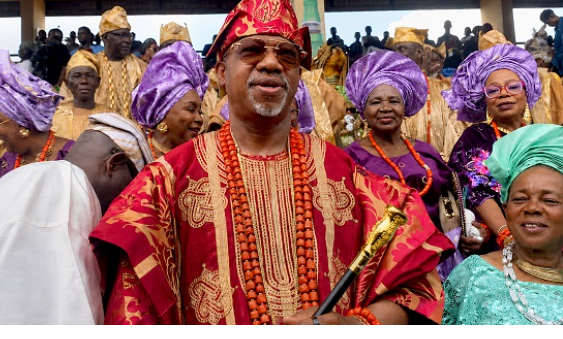
Participants appeared in carefully coordinated outfits featuring luxurious aso-oke fabrics, lace materials and intricately designed traditional attire that reflected both family heritage and communal pride.
The procession of regberegbe groups, regarded as one of the most significant aspects of the festival, once again highlighted the values of unity, social identity and cultural continuity that define the annual event.
The famous Balogun families, known for their equestrian displays, were also expected to participate with their customary horse-riding performances, symbolising bravery, prestige, wealth and the martial traditions of Ijebuland.
Beyond the ceremonial parades, the festival grounds remained lively with traditional drumming, music performances, cultural dances and social gatherings that brought together people from different backgrounds.
Photographs and videos from the event captured scenes of elegance and cultural splendour as guests arrived in flowing agbadas, colourful gele headpieces and richly adorned beaded accessories.
The atmosphere reflected the enduring significance of Ojude Oba as both a cultural celebration and a platform for preserving the customs and traditions of the Ijebu people.
This year’s edition carried special significance as it marked the first Ojude Oba Festival since the passing of the revered Awujale of Ijebuland, Oba Sikiru Kayode Adetona.
The late monarch, who played a pivotal role in elevating the profile of the festival over several decades, was widely recognised for his commitment to preserving and promoting Ijebu culture.
Despite the ongoing transition within the traditional institution, organisers had earlier assured residents and visitors that the festival would continue as a tribute to the enduring legacy of the late royal father.
Their decision underscored the determination of the Ijebu people to sustain one of their most cherished cultural traditions while honouring the contributions of a monarch whose influence helped transform Ojude Oba into a globally recognised cultural event.
As celebrations continued into the day, the festival once again demonstrated its status as a powerful symbol of cultural identity, unity and heritage, bringing together generations of Ijebu sons and daughters in a grand display of tradition and pride.