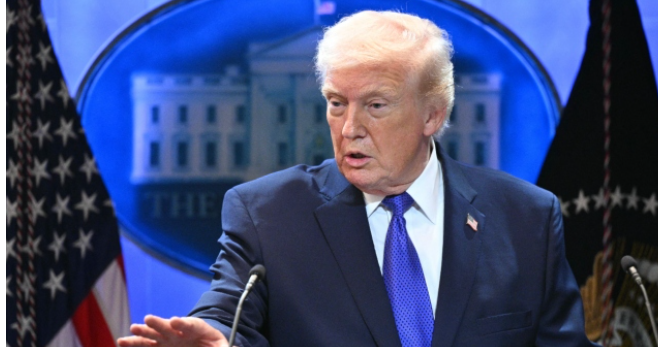
United States President Donald Trump has criticised a vote by the U.S. House of Representatives seeking to end American military involvement in the Iran conflict, describing the move as “unpatriotic” and disruptive to ongoing diplomatic efforts.
The largely symbolic resolution, which called for the withdrawal of U.S. forces from the war with Iran, was passed 215–208 and is now expected to proceed to the Senate. The measure is unlikely to survive a presidential veto.
In a statement posted on his Truth Social platform, Trump said the timing of the vote undermined what he described as final-stage negotiations aimed at ending the war with Tehran.
“The vote came right in the middle of my final negotiations to end the War with the Islamic Republic of Iran
“Who would do such an unpatriotic thing. They know where the negotiations stand.”
The vote saw rare bipartisan division within the Republican Party, as four Republican lawmakers joined Democrats in supporting the measure against Trump’s position.
The resolution marks the first time since the start of the conflict three months ago that the Republican-controlled House has approved a measure aimed at curbing or ending military operations against Iran.
Democrats, however, have accused Trump of overstepping his constitutional authority by launching strikes on Iran alongside Israel in late February without congressional approval.
They argue that the actions violate the U.S. War Powers Act, which requires presidents to seek congressional authorisation within 60 days of deploying forces into hostilities. According to lawmakers, that deadline has already expired.
Responding to criticism, Trump accused Democrats of prioritising political opposition over national interests.
“(Democrats) would rather have our Country fail than give me another, of many, victories,” he said.
He also criticised the Republican lawmakers who supported the bill, calling them “grandstanders” and saying, “They should be ashamed of themselves.”
The measure now heads to the Senate, where its chances of passing remain uncertain.
Even if approved, it is widely expected to face a presidential veto, setting up a potential constitutional and political standoff over war powers and executive authority.