Health officials and humanitarian workers in eastern Democratic Republic of Congo have raised concerns over the increased threat Ebola poses to children, following the deaths of two infants from a church-run orphanage in Bunia during an ongoing outbreak.
The babies were among residents of a Christian orphanage in Ituri Province, located in the epicentre of the outbreak, where dozens of children are currently housed.
One of the infants, identified as Buswaza, was brought into the facility after her mother died in late May.
Caregivers said she developed a high fever shortly after arrival and died within days. She was later confirmed to have been infected with Ebola.
In the same facility, which accommodates about 69 children, medical teams later identified six additional infants as suspected cases following Buswaza’s death.
The children were immediately moved to an isolation unit for treatment and observation.
Five of them later tested negative and were discharged back to the orphanage, where staff in protective gear received them upon return.
However, another infant girl, one of a set of triplets known as “Cherie”—later tested positive for Ebola and died shortly afterward, according to the head of the treatment centre.
Officials confirmed her death as another fatality among the orphanage’s youngest residents.
Three caregivers at the facility, including a nun, have also tested positive for the virus, according to health responders involved in the outbreak response.
The religious congregation managing the orphanage, originally founded by Belgian missionaries, described the situation as deeply distressing.
Health experts warn that Ebola spreads through bodily fluids such as vomit, faeces, and saliva, making young children particularly vulnerable due to the level of close contact required in caregiving.
They also note that mother-to-child transmission can occur during pregnancy, childbirth, or breastfeeding, as the virus has been detected in amniotic fluid, the placenta, and breast milk.
According to UNICEF, children make up a significant share of current infections in the region, with estimates suggesting that nearly one in five Ebola cases involves a child.
Experts warned that malnutrition, weak health systems, and ongoing conflict in eastern Congo are worsening survival prospects.
The World Health Organisation (WHO) has also stated that while data on this strain remains limited, younger patients may experience more severe outcomes when infected.
Local aid groups said many children in the region are already living under severe vulnerability due to displacement, conflict, and poor nutrition, making the outbreak especially dangerous.
Health workers continuye to monitor the orphanage closely as containment efforts intensify.
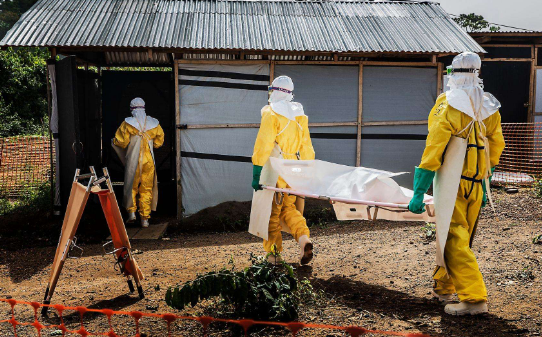
Humanitarian agencies are also stressing the need for safe handling of remains and dignified burials, including child-sized protective equipment for response teams.