Europe Heatwave Turns Deadlier as Records Fall
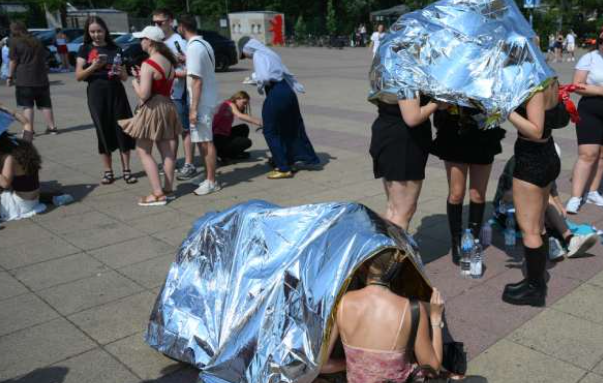
Europe’s unprecedented heatwave intensified on Sunday as scorching temperatures spread further across Central and Eastern Europe, pushing death tolls higher, breaking temperature records and leaving hundreds of millions of people exposed to dangerous heat.
Despite overnight thunderstorms bringing temporary relief to parts of France and Belgium, much of the continent remained under extreme heat conditions, with temperatures exceeding 40 degrees Celsius in several countries.
According to the World Health Organisation (WHO), more than 1,300 excess deaths have been recorded across
An estimated 191 million people were expected to experience temperatures above 35°C during the day, while about 381 million faced temperatures exceeding 30°C.
Scientists from the World Weather Attribution group described the current heatwave as the most severe ever recorded in Europe, saying such extreme temperatures in June would have been “virtually impossible” without the influence of climate change.
The extreme weather has shattered all-time temperature records across several countries. Germany recorded a new national high of 41.7°C near the Polish border, while Poland reached a record 40.5°C in the western town of Słubice.
The Czech Republic also registered a record 41.1°C in Doksany for the second consecutive day of extreme temperatures.
In France, authorities warned that the death toll could continue to rise after the country’s national health agency reported around 1,000 more deaths than normally expected between June 24 and 28, with elderly people accounting for many of the fatalities.
Although the highest-level heat alerts in France were expected to ease later on Sunday, officials remained cautious, recalling the devastating 2003 European heatwave that claimed about 15,000 lives in the country alone.
French Health Minister Stéphanie Rist expressed confidence that improved emergency planning and better preparedness in elderly care facilities would help prevent a repeat of the 2003 tragedy.
Interior Minister Laurent Nunez also defended the government’s response, insisting authorities had anticipated the crisis and implemented appropriate measures.
The heatwave has disrupted daily life across Europe, forcing school closures, straining electricity grids and raising fresh concerns about public health and infrastructure.
The World Health Organisation warned that around 150 million people are currently living under extreme heat conditions, with hundreds of heat-related deaths already reported across the continent.
Scientists also cautioned that rising temperatures are causing long-term environmental damage.
Researchers from France’s National Centre for Scientific Research (CNRS) said warming sea temperatures are disrupting marine ecosystems, leading to the disappearance of cold-water fish species and altering biodiversity.
Climate experts urged governments and the public not to treat the current heatwave as an isolated event, warning that global warming is making such extreme weather more frequent and more intense.
They called for stronger climate adaptation measures and renewed efforts to reduce greenhouse gas emissions as Europe continues to grapple with one of the worst heat emergencies in its history.