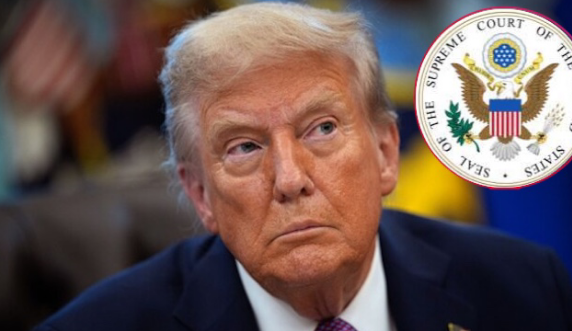
The United States Supreme Court has delivered a major setback to President Donald Trump, ruling against his attempt to restrict birthright citizenship and reaffirming that children born on U.S. soil are entitled to citizenship regardless of their parents’ immigration status.
In a 6–3 decision, the court upheld a lower ruling that blocked Trump’s executive order directing federal agencies to deny citizenship to children born in the United States unless at least one parent is a U.S. citizen or lawful permanent resident.
Writing for the majority, Chief Justice John Roberts said the court found no basis to depart from long-standing constitutional interpretation under the 14th Amendment’s Citizenship Clause, reaffirming precedent set in the 1898 case of United States v. Wong Kim Ark.
He noted that the court had repeatedly recognised birthright citizenship for children born in the United States, adding that there was “scant evidence” to support the administration’s reinterpretation of the clause.
The ruling invalidated one of Trump’s key immigration policies introduced after his return to office, which critics said could have affected the citizenship status of about 250,000 newborns annually.
The administration had argued that the Citizenship Clause should not apply to children of undocumented migrants or temporary visa holders, claiming such interpretation was necessary to curb “birth tourism.”
The Supreme Court, however, sided with plaintiffs who argued that the Constitution clearly guarantees citizenship to virtually all persons born in the United States and subject to its jurisdiction.
The decision marked another significant legal setback for Trump on immigration policy, even as the court has previously supported parts of his broader enforcement agenda.