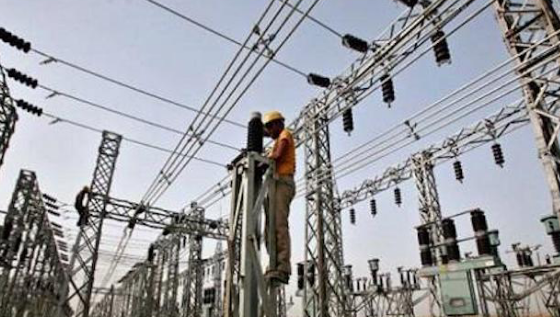
The Transmission Company of Nigeria (TCN) on Wednesday declared force majeure on its Oworonshoki 132/33kV and Lekki 330/132kV transmission substations in Lagos after heavy flooding disrupted operations at the facilities.
The disruption followed days of persistent rainfall that submerged parts of the infrastructure, forcing the Oworonshoki substation completely out of service and affecting key power transformers supplying electricity to parts of Lagos.
According to TCN, two transformers—TR1 with a 60MVA capacity and TR3 with 30MVA—tripped on no-load and could not be restored despite repeated efforts by engineers.
The company also said control and protection cables were submerged, making restoration impossible until floodwaters recede.
Although the Lekki substation remained partially operational due to continuous water pumping, TCN explained that the Oworonshoki facility suffered more severe damage.
Engineers, it added, were still working to evacuate floodwater to enable testing and possible restoration.
The company apologised to affected customers served by the Eko Electricity Distribution Company, noting that efforts to restore supply are ongoing.
The incident highlights the growing vulnerability of Nigeria’s electricity infrastructure to extreme weather conditions, even as authorities intensify efforts to stabilise the national grid.
Meanwhile, Minister of Power, Joseph Tegbe, has renewed calls for an end to vandalism, energy theft, grid sabotage, and estimated billing, describing such practices as major threats to sector stability.
Speaking at a stakeholders’ meeting of the Nigerian Electricity Supply Industry (NESI), the minister stressed that restoring the power sector requires collective responsibility from operators including generation companies, distribution firms, the Transmission Company of Nigeria, and regulators.
He described attacks on power infrastructure as “economic sabotage” and urged that transmission assets be treated as critical national infrastructure requiring stronger protection.
The Nigerian Electricity Regulatory Commission (NERC), led by Chairman Dr. Musiliu Oseni, also called for improved collaboration, strict compliance, and greater transparency across the electricity value chain.
Discussions at the meeting focused on grid stability, metering reforms, SCADA deployment, revenue remittances, and ongoing sector recovery programmes.
Government officials also reiterated plans to fast-track nationwide metering, reduce estimated billing, and improve tariff transparency while protecting vulnerable consumers.
Stakeholders agreed that although reforms have improved parts of the system, sustained investment, stronger regulation, and better infrastructure protection were still essential to achieving a stable and reliable electricity supply nationwide.