The Federal Government has announced that it has established the policy framework needed to drive Nigeria’s transition to clean cooking technologies, urging stakeholders across public and private sectors to shift focus from policy discussions to full implementation through stronger collaboration and sustained investment.
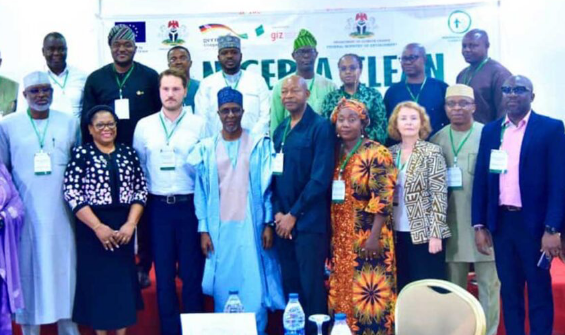
The assurance was given on Thursday in Abuja at an inception workshop on integrating e-cooking into Nigeria’s National Clean Cooking Policy Implementation Plan, where government officials and development partners also called for increased funding and coordinated action to scale up adoption nationwide.
At the event, the Federal Ministry of Environment said Nigeria now has the required policy structure to support the clean cooking agenda, stressing that the next phase depends on collective commitment from stakeholders, including the private sector, development partners, academia and civil society.
Represented by the Director of Climate Change, Dr. Iniobong Abiola-Awe, the Permanent Secretary of the ministry, Dr. Salihu Usman, said the government’s priority is now implementation rather than policy formulation.
He noted that clean cooking adoption would support Nigeria’s climate goals, improve public health, create green jobs and strengthen local manufacturing capacity.
He also urged stakeholders to develop financing models that would make clean cooking technologies affordable and accessible to millions of households across the country.
The Africa Group of Negotiators Experts Support (AGNES) described clean cooking as a critical national development issue, warning that millions of households still rely on firewood, charcoal and kerosene for daily cooking.
The group said the shift to e-cooking should be treated as a priority spanning health, energy, climate and economic development.
Country Director of AGNES Nigeria, Dr. David Awolala, said effective implementation would require affordable appliances, stable electricity supply, innovative financing, consumer awareness and strong institutional coordination.
He added that Nigeria must move beyond discussions into large-scale investments that can deliver measurable impact.
Awolala also disclosed the opening of AGNES Nigeria’s country office, describing it as a step toward strengthening policy coordination, stakeholder engagement and climate finance mobilisation for clean cooking initiatives.
The Federal Ministry of Power, represented by Dr. Sunday Owolabi, also raised concern that about 167 million Nigerians still lack access to clean cooking solutions.
The ministry called for stronger partnerships with investors and development agencies to expand access, reduce deforestation and support Nigeria’s energy transition.
Stakeholders including the Rural Women Energy Security (RUWES) Initiative stressed the importance of involving rural women in the implementation process, noting that access to clean energy improves health, education and livelihoods at the community level.
Similarly, BURN Manufacturing highlighted its investment of nearly $10 million in a clean cookstove factory in Kano, reaffirming its commitment to supporting Nigeria’s transition through climate-focused solutions and financing.
The workshop concluded with the formal inauguration of the National E-Cooking Steering Committee, which would coordinate and drive implementation of the country’s clean cooking policy nationwide.