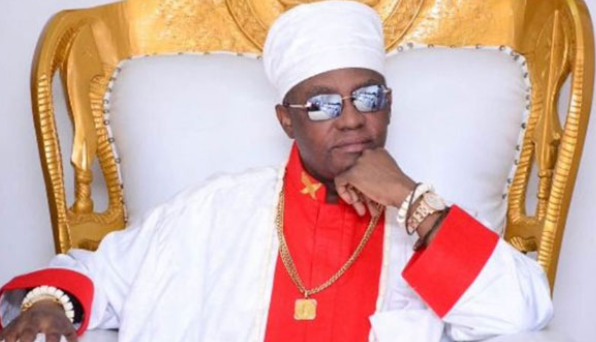
Traditional worshippers in Benin City have carried out ancestral rites and spiritual invocations aimed at confronting rising insecurity, following a directive from the Oba of Benin, His Royal Majesty Omo N’Oba N’Edo Uku Akpolokpolo, Oba Ewuare III.
The ceremony, held on Wednesday, drew priests, priestesses, and traditional healers who gathered in ceremonial procession from the Oba’s Palace before converging at its main entrance.
The event featured libation pouring, propitiatory rites, and spiritual declarations believed to call ancestral forces to witness and act against those involved in violent crimes such as kidnapping and banditry.
Participants also performed cleansing and fortification rituals intended to symbolically protect the land and its people from criminal elements. Prayers for peace, stability, and development in Edo State and across Nigeria formed part of the spiritual exercise.
According to the Benin Palace, the initiative was sparked by a recent directive from Oba Ewuare II, who called for the revival of traditional spiritual responses to complement ongoing security efforts amid growing concerns over violent crime.
Officials emphasised that the rites are not meant to replace law enforcement operations but to work alongside them in addressing insecurity affecting communities.
Speaking after the exercise, the leader of the Ewaise group, Chief Osemwonta Iguezigbon, said the monarch acted in response to worsening security conditions in the country, noting that the spiritual intervention was aimed at restoring peace.
Similarly, Chief Clement Edegbe, priest of the Ayelala deity, expressed optimism that the rituals would help expose wrongdoers and deter further criminal activity, citing increasing social disorder and violence.
The Oyeoba of Benin, Chief Isaac Oghafua Ogiemwense, described the rites as a symbolic strengthening of the land against threats, while priestess Constance Eguavoen praised the Oba for encouraging a return to traditional practices as part of broader security solutions.
The palace maintained that the exercise should be viewed as a cultural and spiritual complement to government-led security operations, rather than a substitute for them.