Oil and gas companies operating in Nigeria remitted a total of $6.755 billion and N1.529 trillion to the Niger Delta Development Commission (NDDC) as statutory contributions between 2021 and 2025, lawmakers heard during an ongoing Senate investigation into the nation’s extractive sector.
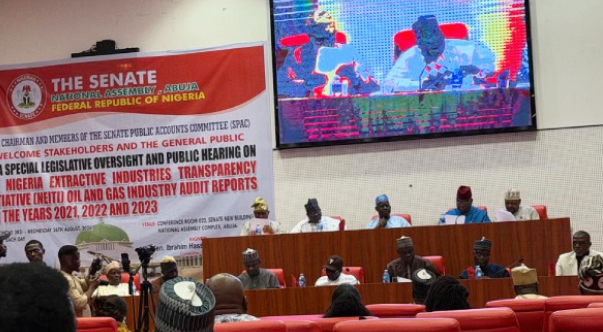
The disclosure was made at the Senate Public Accounts Committee’s investigative hearing on audit reports by the Nigerian Extractive Industries Transparency Initiative (NEITI), where the NDDC presented an updated report covering contributions up to 2025.
The statutory payments represent the mandatory three per cent contribution by oil and gas firms to support development projects and environmental interventions across the Niger Delta.
Representing NDDC Managing Director Samuel Ogbuku, Executive Director of Corporate Services, Ifedayo Abegunde, told the committee that despite the huge remittances, several companies were still indebted to the commission.
According to the report, oil and gas operators owe the NDDC $290 million and N163 billion in outstanding statutory contributions for the period under review.
The Senate committee, chaired by Senator Ibrahim Dankwambo, is examining audit queries raised by the Office of the Auditor-General of the Federation on activities in the extractive industry between 2021 and 2023.
Also appearing before the committee, Chairman of the Revenue Mobilisation Allocation and Fiscal Commission (RMAFC), Mohammed Shehu, disclosed that Nigeria spent N1.16 trillion on fuel subsidy in 2021.
He further revealed that another N1.20 trillion was deducted from proceeds of the country’s crude oil sales within the same year.
According to Shehu, additional deductions included N16.20 billion for crude oil and petroleum product losses, N22.05 billion for pipeline repairs and N6.75 billion for strategic petroleum stock holdings.
The RMAFC chairman also expressed concern over the current method used in calculating the 13 per cent derivation fund, arguing that the existing formula falls short of achieving the constitutional objective behind the policy.