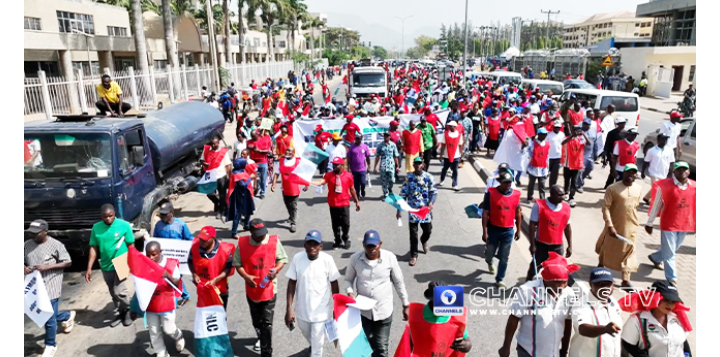
Nigeria’s labour movement has renewed its call for a review of the N70,000 national minimum wage, arguing that the amount is increasingly out of step with the rising cost of living and the economic pressures facing workers.
The demand was made at the 2026 Nigeria Rights of Workers Summit in Birnin Kebbi, Kebbi State, where labour leaders, government representatives, employers, civil society groups and other stakeholders gathered to discuss the future of workers’ rights.
The summit, organised to mark 88 years of legally recognised trade unionism in Nigeria, was held under the theme, “The Rights of Workers: Decent Work and a Just Economy in Nigeria.”
Representing Nigeria Labour Congress President Joe Ajaero, the NLC Deputy President, Amba, identified the minimum wage as one of the most pressing concerns for Nigerian workers.
He said the current wage had lost much of its purchasing power as prices of essential goods and services continued to rise.
“The current N70,000 minimum wage can no longer adequately respond to the realities confronting Nigerian workers, particularly with the rising cost of living,” he said.
According to him, the expiration of the existing wage arrangement provides an opportunity for the Federal and State Governments to return to the negotiating table and determine a new wage that reflects prevailing economic conditions.
Former NLC President Ayuba Wabba broadened the discussion, arguing that improving workers’ welfare should not be reduced to increasing salaries.
For Wabba, genuine decent work must encompass a wider package of protections, including respect for workers’ rights, social security and meaningful engagement between labour, employers and government.
“Decent work is not only about wages. It is also about workers’ rights, social protection and meaningful social dialogue between workers, employers and government,” he said.
His position highlights the broader challenge facing Nigerian workers: even where salaries increase, the absence of adequate social protection, workplace security and effective labour relations can continue to undermine living standards.
The summit convener and Executive Director of Call a Lawyer, Ekpa Stanley, said the anniversary of Nigeria’s organised trade union movement should be used to examine how much progress workers have made and what remains to be done.
He called for the principles of decent work to move beyond policy discussions and produce measurable improvements in workers’ everyday lives.
Participants also considered workplace safety, discrimination, inflation and the growing number of workers operating outside traditional employment arrangements.
Kebbi State Governor Nasir Idris assured workers in the state that his administration would implement any new national minimum wage agreed upon by the Federal Government and labour.
“Whatever is agreed upon at the national level on the minimum wage, Kebbi State will implement,” Idris said.
The governor also pledged to push for improved wages during engagements with his counterparts at the Nigeria Governors’ Forum.
He commended civil servants for their contributions to governance and development, while the summit participants continued to press for policies capable of protecting workers from the effects of rising living costs.
As Nigeria marks 88 years of legally recognised trade unionism, labour leaders are using the milestone to renew their argument that workers’ earnings must keep pace with economic realities.
For the unions, the debate is no longer simply about the size of a monthly pay cheque. It is about whether workers can afford basic necessities, enjoy safe workplaces, access social protection and participate meaningfully in decisions affecting their livelihoods.
With the current N70,000 wage increasingly described by labour as inadequate, renewed negotiations between government and workers could become a major economic and industrial issue in the months ahead.