As Nigeria looks ahead to the 2027 general elections, one question continues to dominate public discourse: can the country rebuild confidence in its electoral process?
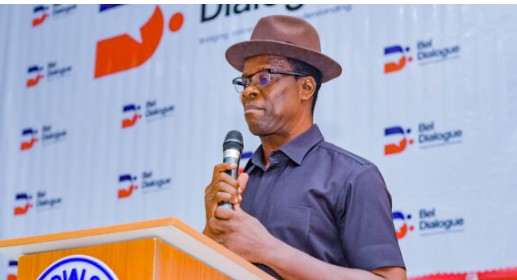
That question took centre stage at the 2026 BEL Dialogue in Asaba, where former Independent National Electoral Commission (INEC) Resident Electoral Commissioner, Mike Igini, delivered a forceful message on the future of Nigeria’s democracy.
With his reputation as an uncompromising advocate of electoral integrity and democratic reform, Igini set the tone for what became a robust conversation on public trust, institutional independence and the credibility of elections.
His central argument was simple but profound: the credibility of an election begins with the process, not the declaration of results.
Speaking as Chairman of the dialogue, Igini warned that public confidence in the 2027 elections would depend heavily on the transparency and fairness of the electoral process.
For him, merely announcing results cannot guarantee legitimacy if Nigerians do not trust the processes that produced those results.
He stressed that electoral institutions must remain independent, accountable and insulated from manipulation.
The former INEC commissioner also made a broader point about democracy itself: institutions must be stronger than the individuals temporarily occupying them.
That position resonated strongly with the theme of the dialogue, “Democracy That Works: Bridging the Gap Between Votes, Results and Institutional Accountability.”
The message from the gathering was unmistakable: Nigeria’s democratic future cannot rest solely on personalities.
It must be anchored in institutions capable of operating independently, transparently and professionally.
Much of the discussion inevitably turned to INEC, the institution at the centre of Nigeria’s electoral process.
Participants argued that the commission requires both operational and structural reforms if it is to meet the expectations of Nigerians in 2027.
Among the concerns identified were weaknesses in electoral laws, voter apathy, corruption, inadequate funding and persistent questions about the commission’s capacity to deliver elections that citizens can confidently trust.
There are also concerns surrounding political neutrality, logistical shortcomings, voter-registration data and the deployment of election technology.
Opposition figures and civil society organisations have repeatedly questioned whether the commission enjoys sufficient independence, particularly in relation to appointments and administrative decisions.
Concerns have also been raised about the consistency of real-time electronic transmission of results, while data-protection advocates have expressed alarm over the reported exposure of voter information.
These issues have combined to create a difficult environment in which INEC must not only conduct elections but also convince a sceptical public that it is capable of doing so impartially.
The spotlight, therefore, is firmly on INEC as the 2027 elections approach.
The commission has assured Nigerians that every vote will count, that its institutional independence remains intact and that secure, transparent logistics will receive priority.
President Bola Tinubu has also defended the commission, maintaining that INEC remains neutral and arguing that attacks on its credibility are politically motivated.
But assurances alone may not be enough.
What Nigerians increasingly appear to demand is evidence — evidence that electoral materials will arrive when and where they should, that technology will work as promised, that electoral officers will follow the rules and that votes will be protected from manipulation.
INEC Chairman, Professor Joash Amupitan, therefore faces a significant challenge: to turn institutional assurances into demonstrable electoral credibility.
He has pledged transparent handling of electoral materials and adherence to established guidelines. The 2027 elections will provide the ultimate test of those commitments.
Yet, despite the concerns, the BEL Dialogue did not end on a note of despair.
There was a discernible sense of optimism that Nigeria can correct the weaknesses that marred previous elections and build a system capable of earning greater public confidence.
The conversation demonstrated that Nigerians are not necessarily losing faith in democracy itself.
Rather, many are demanding a democratic system that works — one in which their votes matter, institutions are accountable and results reflect the will of the electorate.
Democracy is sustained not merely by elections but by confidence in the institutions that conduct them.
And this was perhaps the strongest lesson from the Asaba gathering: credible elections are built long before election day.
They are built through sound laws, independent institutions, adequate funding, competent personnel, reliable technology, transparent procedures and a judiciary capable of defending electoral justice.
The BEL Dialogue provided a platform for that conversation, bringing together voices determined to interrogate the weaknesses in Nigeria’s electoral system while exploring practical ways forward.
Credit must therefore go to Emmanuel Enebeli, publisher of Ndokwa Reporters, for creating the platform for such a consequential discussion.
The significance of the initiative was captured by Professor Epiphany Azinge, Asagba of Asaba, when Igini visited his palace. In his words, with intellectual gatherings such as the BEL Dialogue, “Asaba do not need to venture outside to be treated to intellectual discussions.”
That may well be the enduring value of the dialogue.
Beyond the speeches and disagreements, it created space for Nigerians to confront an uncomfortable reality: the credibility of the 2027 elections will not be determined by promises alone.
It will be determined by whether the institutions responsible for the process can earn the confidence of the people.
And, as Mike Igini’s intervention made clear, that confidence must begin with the process itself.