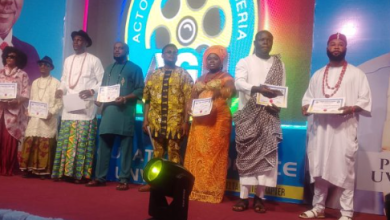
The Nigerian French Language Village (NFLV) has won the inaugural Word-Wise Bilingual Series – University Edition, emerging ahead of five other institutions in a competition that placed language, leadership and problem-solving at the heart of the contest.
The four-day event, organised by the Word-Wise Educational Support and Advancement Foundation in collaboration with the Embassy of France in Nigeria through the French Embassy Fund Bilingual And Competitive Project (FEF-BAC), brought together students from six higher institutions across the Southwest.
But this was not simply a contest about who could deliver the most convincing speech.
Students from the University of Ibadan, University of Lagos, Lagos State University, Obafemi Awolowo University, Olabisi Onabanjo University and NFLV were required to debate in both English and French, testing their ability to think critically and communicate effectively across linguistic boundaries.
The competition also introduced an Africa Solution Room, challenging finalists to move from argument to action by proposing practical responses to some of the continent’s most persistent problems.
Youth unemployment, education, governance and regional integration became subjects for students to tackle, giving the competition a broader purpose beyond language proficiency.
They wanted to demonstrate that learning another language should not end with vocabulary, grammar and examinations. Instead, bilingualism can become a practical tool for confidence, leadership, employability and collaboration.
The Cooperation Attaché and Coordinator of the FEF-BAC Project at the French Embassy in Nigeria, Magaly Losange, said the students’ performance showed what becomes possible when language skills are tested in real situations.
She singled out the confidence displayed during the competition, particularly in the unpredictable Crossfire rounds, where participants had to respond quickly and defend their positions.
“What impressed me most was not simply the quality of the debates, but the confidence and intentionality the students demonstrated, particularly during the Crossfire rounds,” she said.
According to Losange, the participants demonstrated that French learned in the classroom could become much more than an academic subject when applied to spontaneous conversation, critical analysis and teamwork.
That practical dimension, she explained, reflects the larger ambition of the FEF initiative: to make bilingualism a pathway to greater confidence, wider opportunities and stronger relationships among young Africans.
She congratulated the contestants and said their performance underlined the importance of equipping young people to operate effectively in an increasingly connected world.
For Word-Wise, the competition also provided a test of a larger belief: that Africa’s linguistic diversity can become an asset rather than an obstacle.
Senami Ohiomokhare, Co-Chief Executive Officer of the foundation, said bilingualism could help produce young leaders capable of moving comfortably between different cultural and linguistic communities.
“At Word-Wise, we believe that every young person has a story worth telling and a voice worth hearing,” Ohiomokhare said.
She said the programme gave students room to build confidence, exchange competing ideas respectfully and discover how communication can create connections between people from different backgrounds.
Leadership, she added, begins with “listening, understanding and connecting with others.”
Victor Ibrahim, the foundation’s other Co-Chief Executive Officer, placed communication at the centre of effective leadership.
“Leadership is impossible without communication,” Ibrahim said.
He noted that the students were not merely reproducing prepared speeches. Their performance, he said, reflected genuine conversation, critical debate and collaboration.
The experience demonstrated that language can unite people across cultural and national boundaries while giving young Africans the tools to participate more confidently in shaping the continent’s future.
Nearly 1,000 young people reached
The university edition attracted an audience of more than 200 students, adding to the reach of earlier Word-Wise Bilingual Series programmes designed for upper primary and junior secondary school pupils.
The foundation said the two editions have now directly reached nearly 1,000 young people.
Beyond bilingual communication, participants have been exposed to skills in leadership, employability, public speaking and interpersonal communication.
The organisers are also seeking to ensure that the impact of the competition does not disappear once the final debate ends.
A digital storytelling campaign is planned to keep participants and their experiences in the spotlight, with content expected to include student profiles, mentorship opportunities, behind-the-scenes moments, debate highlights and success stories across social media.
Building bridges across Africa
The organisers are already looking beyond the first university edition, with plans to expand participation, deepen partnerships and create more opportunities for young people to collaborate across linguistic and national borders.
The significance of the initiative therefore extends beyond the victory of the Nigerian French Language Village.
At a time when Africa continues to grapple with linguistic divisions inherited from its colonial past, programmes that encourage young people to communicate across language communities offer a different model of integration—one built not only on policy and institutions, but also on the ability of ordinary young Africans to understand and work with one another.
For the students who took part, the competition may have begun as a debate.
Its larger lesson was that knowing another language can mean gaining another way to listen, another way to connect and, potentially, another way to lead.