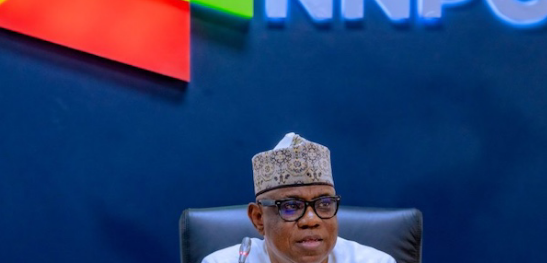
The Nigerian National Petroleum Company Limited (NNPC Ltd) has pushed back against allegations of poor performance, questionable licensing practices and impropriety involving its management, insisting that its production figures show measurable growth since Bayo Ojulari became Group Chief Executive Officer.
The oil company also drew a clear line between its commercial responsibilities and the regulatory powers of the government agency responsible for upstream licensing, rejecting claims that it influences the allocation of oil blocks.
The response followed allegations by the Oil and Gas Professionals Forum (OGPF), which called for an investigation into NNPC’s leadership and operations, citing concerns over production levels, licensing procedures and contract awards.
The forum, in a statement signed by its convener, Ayodele Momoh, questioned the transparency of the marginal fields licensing process and alleged possible insider influence and unequal application of rules.
It also called for Ojulari’s removal and raised questions about alleged links between individuals close to NNPC’s leadership and companies said to have benefited from licensing outcomes.
OGPF further challenged the claim that oil production had significantly improved under the current management, arguing that output remained below the often-cited 1.7 million barrels per day benchmark.
But NNPC, in a statement issued on Saturday by its Chief Corporate Communications Officer, Andy Odeh, described the allegations as inconsistent with both its statutory role and available performance data.
The company specifically rejected suggestions that it possesses powers over oil licensing rounds and block allocation.
“Under the Petroleum Industry Act (PIA) 2021, the conduct of oil licensing rounds and the allocation of oil blocks fall squarely within the statutory mandate of the Nigerian Upstream Petroleum Regulatory Commission (NUPRC),” NNPC said.
It added: “NNPC Limited, since its incorporation, has operated strictly as a commercial entity and holds no regulatory or allocative authority.”
On production, the national oil company said its records showed a year-on-year increase rather than stagnation.
According to its Monthly Performance Report, average crude oil production, including condensate, stood at 1.60 million barrels per day in April 2025. By April 2026, the figure had climbed to 1.67 million barrels per day.
NNPC said the increase of roughly 80,000 barrels per day represented about six per cent growth, urging stakeholders to assess the company using verifiable corporate and regulatory records rather than unverified claims.
Gas production also recorded an increase over the same period, according to the company.
NNPC said average gas production rose from 7,354 million standard cubic feet per day (mmscfd) in April 2025 to 7,729 mmscfd in April 2026, representing growth of approximately five per cent.
The company said the higher gas output was supporting both domestic energy requirements and Nigeria’s commitments in the international gas market.
While acknowledging the importance of criticism and independent scrutiny, NNPC said such assessments should be grounded in facts.
“While NNPC Limited welcomes scrutiny of its operations and performance, consistent with the transparency and accountability the company holds itself to, it is important to set the record straight on the specific claims raised,” the company said.
It called on industry analysts, professional bodies and other commentators to verify information through the appropriate regulatory and corporate channels before making public allegations.
According to NNPC, doing so would ensure that public discussions about the country’s energy industry remain factual and constructive.
“This will help ensure that public commentary is factual, balanced, and contributes constructively to informed discourse on the Nigerian energy sector,” it added.
The national oil company said it remained committed to transparency and would continue to engage publicly on matters concerning its performance and operations.
However, it also issued a warning that it would take appropriate measures to protect the reputation of the company and its leadership against claims it considers false or unsupported.
The exchange has brought renewed attention to the performance of Nigeria’s state-owned oil company, the country’s crude and gas production trajectory, and the separate roles of commercial operators and regulators within the petroleum industry.